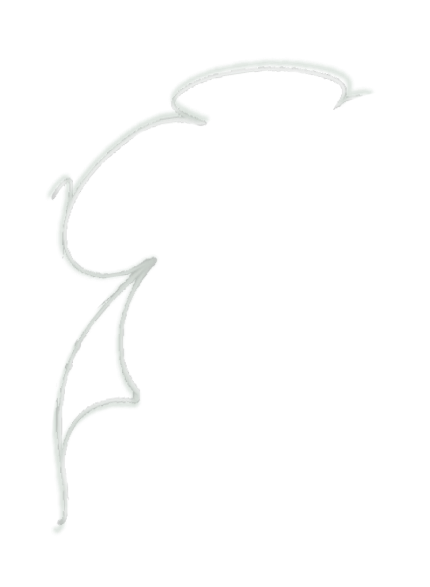
The vertical orientation of the Aster with its Spine at the top where the performed pentagram appears upward-pointing. The downward-pointing Aster is called a Katabasis Aster. The encompassing Penter adopts the corresponding definition.
These are the fundamental geometric forms within Pentegraph, including the Penter, Aster, Dykirkos, Kirkos, and Tortoiseshell, each with unique characteristics and applications.
This refers to the ways the body is positioned and moves to execute Pentegraph movements. Examples include the Condor, Dragonfly, Hawk, and Pelekan, each mimicking a natural form.
A specific type of Canted Gate that occurs during a Penter Transit from a Lower Gate to an Upper Gate, where one hand's Penter path shifts upwards in vertical space.
Aspects of the Aster
The distinct orientations of the Aster's 3D path where the pentagram faces different directions, due to the rotation of its defining plane. xyzx (Exwhyzedex),
yzxy (Whyzedexwhy), or
zxyz (Zedexwhyzed):
A fundamental Artefact in the Pentegraph system, formally defined as a Spherical Helix, which represents a unique three-dimensional geometric path performed by the human body.
The simultaneous praxis of two distinct Asters, typically performed using the pentagram templates at the centres of two interlocked Penters within a Gate of the Pentegraph Orb.
Asterial Echo
A two-hand Asterial Praxis where the left hand follows the right hand (or vice-versa), specifically one arc behind, creating a precise chasing and mirroring effect.
Asterial Prime
The fundamental, single-hand execution of the Aster.
Asterial Stroke
A specific portion of the Aster's path where a concentrated input of effort occurs. There are five such strokes in a complete traversal of the Aster each corresponding to a bifurcated circle.
A Somatic Aster located in the head, circumnavigating the pineal gland. It is associated with psychic abilities, projection of reality, and inducing out-of-body experiences (OBE).
A Somatic Aster located behind the Adam's apple. It is linked to communication, social integration, and the acquisition of authority and gravitas.
Coiling the Asterial Visage
A two-hand Asterial Praxis where both palms always face each other as they follow the Spherical Helix, requiring abrupt wrist twists to maintain the constant inward-facing palm orientation.
The Joining of 2 or more Penters or Asters into performance configurations, such as the Mirror, Loom and Gate..
Contragrade
The reversed rotational direction (opposite to pentegrade) of the Penter Gyre, used when performing within the Mirrorway (e.g., in the Megak forms of the Loom and Mirror). Also a direction for the Aster Gyre.
Cypher
A part movement within an Aster consisting of a Stroke or 3 Arcs.
Dodekakirkos Cross
A 12-circle orb configuration used in the Pentegraph Orb, which is like a collapsed version of the Dodekakirkos Touch.
Dodekakirkos Orb
An orb composed of twelve circles that overlap each other, with each circle encircling the five smaller circles of an Eikosakirkos Penter.
A type of Penter where five circles meet in the middle, creating a central pentagram. It serves to join Eikosakirkos circles together. There are 12 of them in the Orb.
Dodekakirkos Touch
A 12-circle orb configuration where circles touch, similar to a dodecahedron with circles instead of pentagons. This orb lacks usefully interacting paths.
An asynchronous two-handed movement style performed within the Gate where the right hand operates approximately one full circle ahead of the left hand.
Another name for the Gate; a conjoining of 2 Penters.
Egress
The outward "push" action within an Asterial Stroke, signifying a proactive application of force. Can also be applied to a Whyzed or Zedex Penter during the outward parts of the movement. The opposite action is called ingress
Eikosakirkos Cross
A 20-circle orb configuration where circles cross instead of touch, and which does not have usefully interacting paths.
Eikosakirkos Orb
An orb composed of twenty circles that touch each other, forming groups of five circles known as Penters. It is the spherical equivalent of the Platonic solid icosahedron.
Eikosakirkos Penter
A type of Penter where five circles are arranged in a ring, touching each other without crossing. There are 12 of them within the Orb.
Eikosakirkos Touch
The 20-circle orb configuration used in the Pentegraph Orb, equivalent to the icosahedron with 20 faces.
Enchanting the Aster
A technique where words or sounds are rhythmically associated with the Aster's five bifurcated circles during performance to enhance focus and direct intent.
This signifies a collection of Pentegraph techniques chained together, highlighting the system's potential for developing routines or "forms."
Entelechic Flux
The term used to illustrate the flowing continuity and underlying energetic flow when combining Asterial Strokes together.
Entelechic Tremor
A technique where the Penter Gyre is accompanied by a fast, rhythmic 8Hz shake, hypothesized to have strengthening effects on the body and the Penter movement.
Entelechic Twist
The conceptual term for the inherent drive of the Aster's path, compelling its specific twisting form.
Esokirkos
The esoteric name for the Aster, meaning "Inner Circle."
In Pentegraph, a circle (kirkos) that is facing you, as if on a wall. Taken from the coordinates of 'x' and 'y' as used on a computer screen where 'x' is across, 'y' is high, and 'z' is zoom.
Exwhy Kirkosial Echo
A specific praxis, also known as the Kirkostu, where two hands trace a single circle, one arc behind each other.
A style of synchronous movement within the Pentegraph Armature where both hands perform on their opposite respective circle within the Gate at the same temporal point.
Hypermesokirkos
The Kirkos above the Mesokirkos of the Katabasis Tortoiseshell.
Hypomesokirkos
The Kirkos below the Mesokirkos of the Anabasis Tortoiseshell.
Ingress
The inward "pull" action within an Asterial Stroke, signifying a reactive or returning application of force. The opposite action is called Egress.
Katabasis
The vertical orientation of the Aster where the performed pentagram appears downward-pointing. The upward-pointing Aster is called an Anabasis Aster. A Katabasis Penter would have its solitary Kirkos at the top.
Kinesia
The act or process of movement of the Pentegraph Praxis.
The fundamental unit of circular motion and geometry within the Pentegraph system, representing a single circular path.
Kirkostu
A specific praxis, also called the Exwhy Kirkosial Echo, where two hands trace a single circle, one arc behind each other.
Lower Gate
The usual and most common configuration of the Gate, composed of two "lower Penters" that overlap to form eight distinct circles, and are found in the lower hemisphere of the Pentegraph Orb.
Lower Penter
A Penter that has its central pentagram point downwards, and in its common representation, has a circle at the top and four circles underneath. These are the Penters that occupy the lower hemisphere of the Pentegraph Orb and are also known as Katabasis Penters.
Lower Tortoiseshell
A Tortoiseshell configuration where a Lower Gate is at the bottom with an Upper Penter above. This is usually performed with the hands only, utilizing Canted Gates in the performance.
A facet of Pentegraph focused on self-transformation and the manifestation of desired outcomes.
Megaster
Formed when two Asters overlap each other, with their centres sharing the exact same point in space, creating a distinctive 10-pointed star.
Megasterial Echo
A specific form of Megaster praxis where the left hand performs an Anabasis Asterial Prime and the right hand performs a Katabasis Asterial Prime, both in an anti-clockwise direction and mirrored in their synchronization.
The basic sphere of interconnected circles that surrounds the practitioner, serving as a dynamic canvas for performing the geometric patterns and movements of the Pentegraph system.
Pentegrade
The normal rotational direction for Penter performance: anti-clockwise for the right hand and clockwise for the left hand. If performed within the Mirrorway, these directions are reversed and are called contragrade.
A contraction of "Pentegraph Template", the key Artefacts of Pentegraph used as templates to trace their path.
Pentenexus
The central pentagram within a Penter, formed from part of the Dodekakirkos circles that surround each Penter. They are the connecting paths for each of the circles of the Penter.
A fundamental Artefact representing a basic path interwoven throughout the Pentegraph Orb, composed of five circles. Unless otherwise stated, it refers to the Eikosakirkos Penter path.
Penter Enkirkos
A Penter within the encompassing circle of a Dodekakirkos circle.
Penter Gyre
A continuous route that traverses the Penter and is the name for the path and the following of it.
Penter Transit
The specific act of a hand migrating its Penter path from one Penter structure to another, usually from a Penter on one hemispheric level to a Penter on another hemispheric level.
Pivots
The joints of the body that are at the central hub or fulcrum of the Aster or Orb.
Praxis
The name for the practices of Pentegraph. The general act of performing Pentegraph movements.
A Somatic Aster located within the pelvis, serving as the locus for desires related to stability, grounding, power, and strength, its shape mirroring the downward pentagram.
A Somatic Aster located at the Solar Plexus, serving as the place to associate self-confidence, integration, and egoic empowerment.
Spherical Helix
The formal definition and primary term for the path of the Aster.
Split Tortoiseshell Dance
A variation of the Tortoiseshell Dance designed to ease the difficulty of synchronization by spatially separating the Lower Penter (for the foot) from the primary three-Penter structure, leaving the hands to perform the Gate without spatial coordination with the foot.
Stroke
A specific portion of the Aster's path where a concentrated input of effort occurs. There are five such strokes in a complete traversal of the Aster each corresponding to a bifurcated Kirkos.
The tensional integrity that is within the construction of living organisms.
Thoracic Aster
A Somatic Aster located at the spiritual heart on the chest, embodying the "heart's desire" and associated with seeking contentment, love, and grace.
Tortoiseshell
A specific three-dimensional geometric configuration within the Orb, comprising three overlapping Penters.
Tortoiseshell Dance
A highly complex performance within the Pentegraph system, executed with one foot and two hands, where the hands typically perform within an Upper Gate and the foot engages with a Lower Penter.
In Pentegraph, a circle (kirkos) that is perpendicular to you, as if to your side. Taken from the coordinates of 'y' and 'z' as used on a computer screen where 'x' is across, 'y' is high, and 'z' is zoom.
In Pentegraph, a circle (kirkos) that is flat to the floor in front of you. Taken from the coordinates of 'z' and 'x' as used on a computer screen where 'x' is across, 'y' is high, and 'z' is zoom.