A planetary nebula with a white dwarf at its centre which has been throwing off its outer layer over the last few thousand years. It has expanded now to be nearly a light year across.
Hubble Space Telescope
Star Bursting
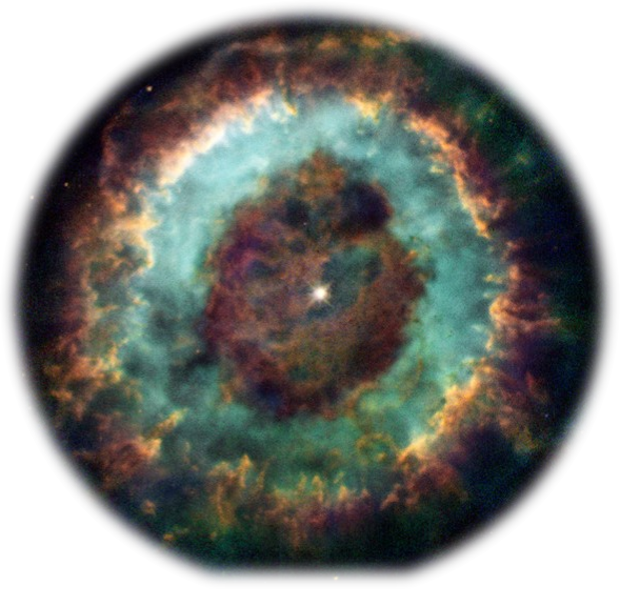
The life process of a star is determined by its nuclear fusion. It has at its beginning the ignition of nuclear fusion, and at its end, the extinguishing of this nuclear process. Without the outward pressure of the nuclear fusing, gravity collapses the star into a compacted plasma of incredible density, but before it does this, the outer layers are thrown off in an explosion of outstanding beauty. This end process pours out newly created elements into the galaxy to seed new solar systems.
The Earth sized white dwarf which is the stellar remnant that remains in the centre of this debris, is mostly made up of carbon and solid oxygen. It could be seen that these stars are effectively filtering the universe of hydrogen and locking it away as oxygen and carbon. That which does not get locked away, and all the other elements that it has created, get blasted out into the galaxy to eventually form new worlds for the likes of us to sit upon.
If the star was more than ten times bigger than our sun, then instead of it forming a white dwarf, it collapses even further into an even denser object called a neutron star. One teaspoon full of this stuff would weigh about 1,000 million tons! With a radius of only 10-15 km (compared to our sun's radius of 1,000,000 km), radiation is beamed out along the magnetic poles and pulses of radiation caused by a misalignment between this and its rotation, are received by us as a beam that crosses the Earth as it spins. The resulting pulses that we detect from this is why we call them Pulsars.
Our sun spins once every 25 days, but the process that creates these pulsars causes them to be revved up considerably. The rotation of these pulsars are captured here and converted into sound, from slow (if spinning once a second could be considered slow!), to insanely fast: B0329
 , Vela
, Crab
, J0437
, B1937
, Vela
, Crab
, J0437
, B1937
Consider the awesomeness of these incredibly dense balls of spinning exotic matter, where the electrons have fused with the protons to form neutrons and all the space between has been sucked out. The last one is spinning so fast (642 revolutions per second), it is rotating at 1/7th the speed of light; the immense centrifugal forces are prevented from tearing the star apart by its incredible gravity. There's an even faster one that's been recently discovered that is spinning at 716Hz.
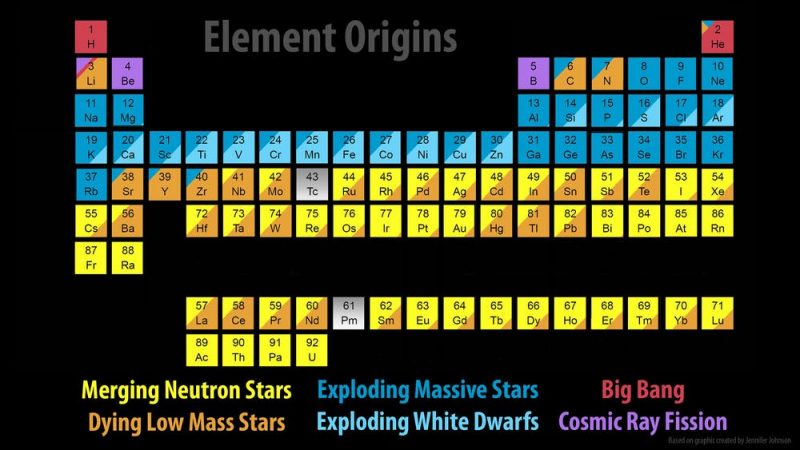
When 2 neutrons stars collide (producing a kilo-nova), they can produce a gamma ray burst that can produce as much energy in half a second than our sun does in its 10 billion year life time! A gamma ray burst has been recorded with photons of over 100 million electron volts; a normal photon has just 2 electron volts! It is kilo-nova’s that produce all the heavier than iron elements such as gold etc.
~
Although these star bursts are normally thought of as being the end of a stars life, they are just as much the cause for new life, and the event is just part of a re-cycling process, and the material doesn't disappear but is re-consumed and used to further the process of the universe. They are equally about the creation of life as they are an event of death. Even the stellar remnants that are the white dwarfs and neutron stars, may be important resources for our very far future and the unknowable endeavours of our successors.
These are pictures of where we come from. These are the antecedence of us. They are the ingredient makers and are like sperm to fertilize the universe.

⮘
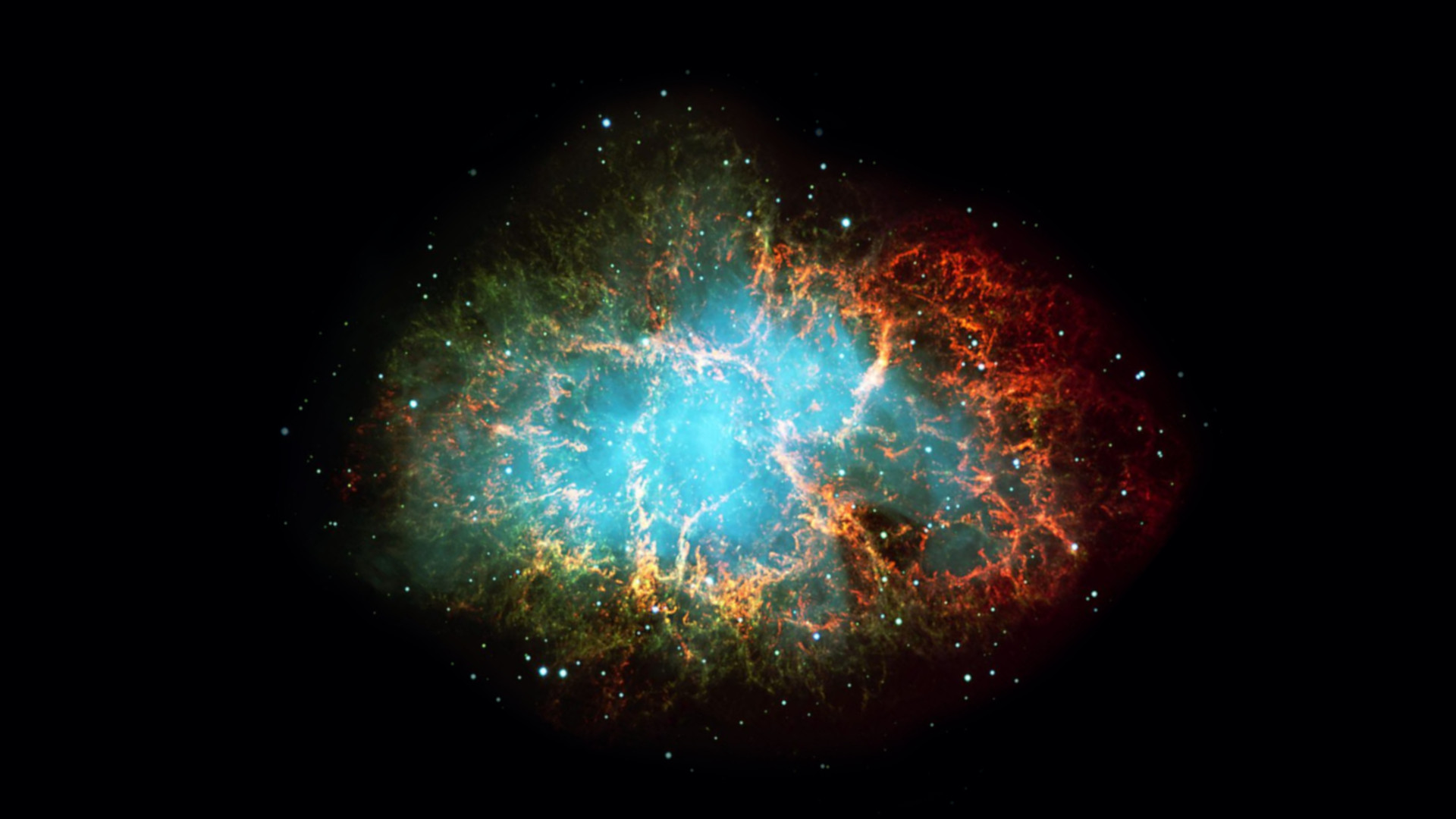
A Supernova eye-witnessed in 1054 A.D. it being visible in the daytime for nearly a month. The mostly hydrogen cloud is expanding at over 900 miles per second, being 11 light-years in diameter. It occupies more space than between our sun and our nearest neighbouring star which is just over 4 light-years distant, and there is enough carbon and silicate material within it to make over 30,000 Earths.
The central neutron star is rotating 30 times per second, its electro-magnetic pulses making this sound:
The blue mist in the picture is electricity produced by the pulsar.
Hubble Space Telescope
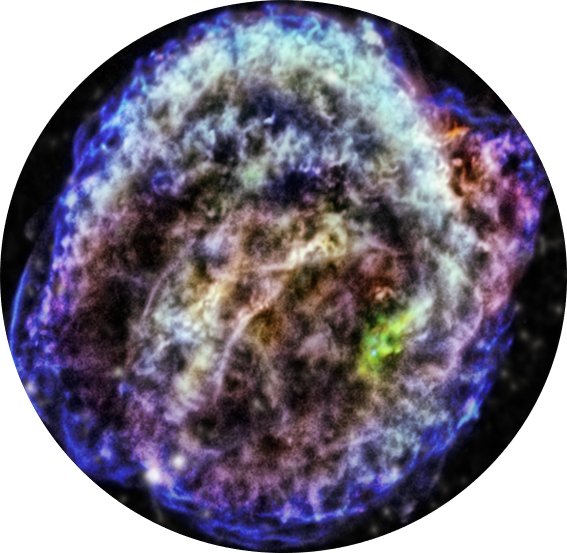
A type 1a supernova, 20,000 light-years away and observed in 1604 when it was visible in daylight. It was the last supernova to be observed occurring in our galaxy. Material is being ejected at 5,000 miles per second.
Chandra X-ray Observatory
⮘
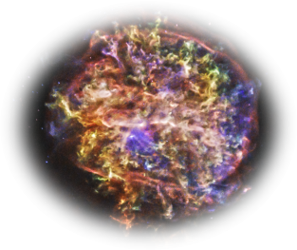
Super Nova remnant with no detectable hydrogen or helium! oxygen (yellow and orange), magnesium (green) and silicon and sulphur (blue).
Chandra X-ray Observatory
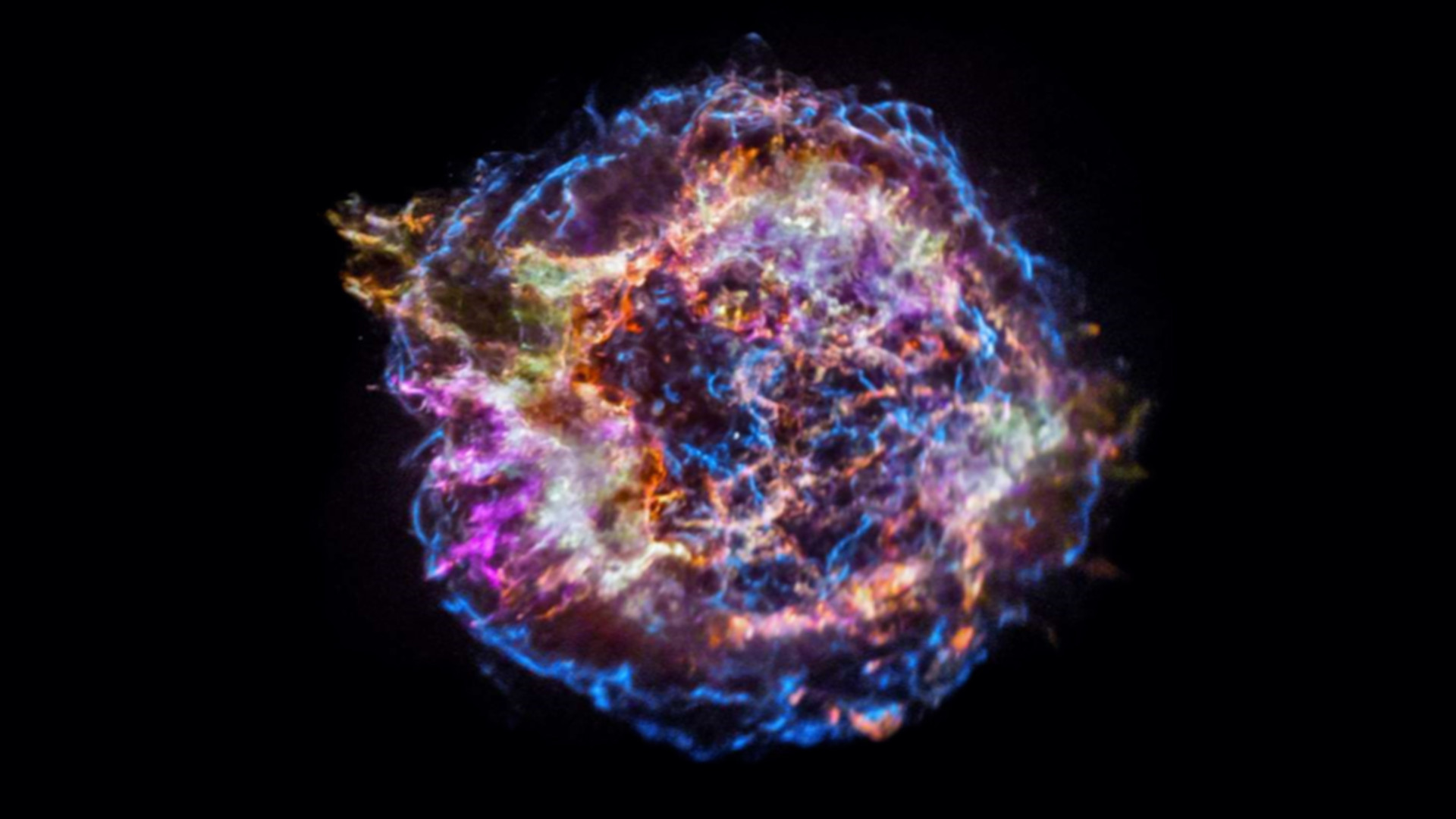
A supernova 10,000 light-years away witnessed from Earth about 330 years ago. Leaving a neutron star at its centre, this image is a composite from three telescopes and falsely coloured to show its comprising elements of silicon (red), sulphur (yellow), calcium (green) and iron (purple)
 Hubble Space Telescope
⮘
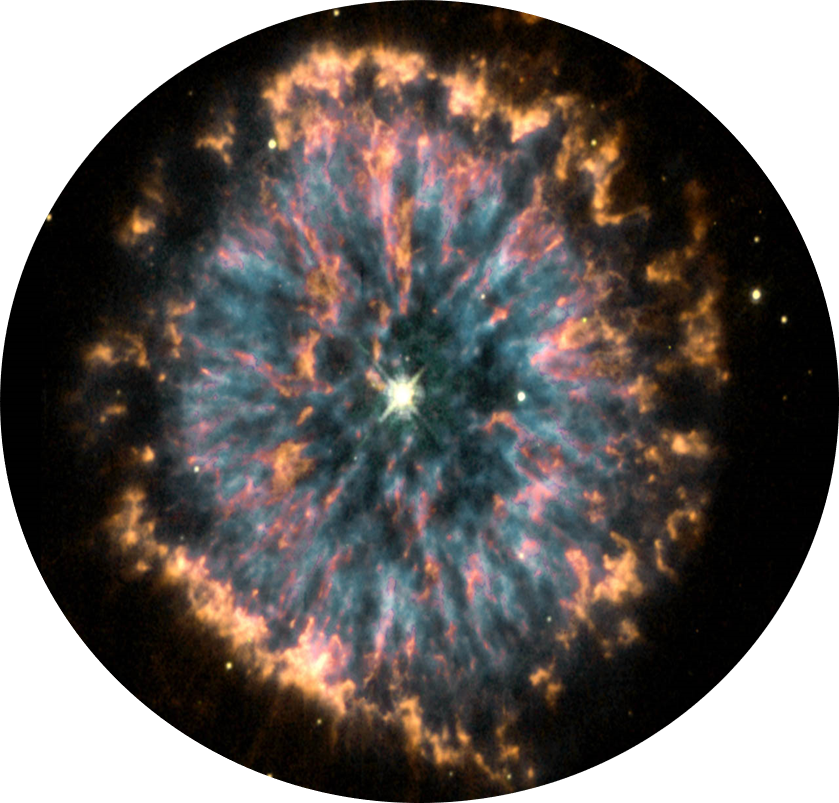
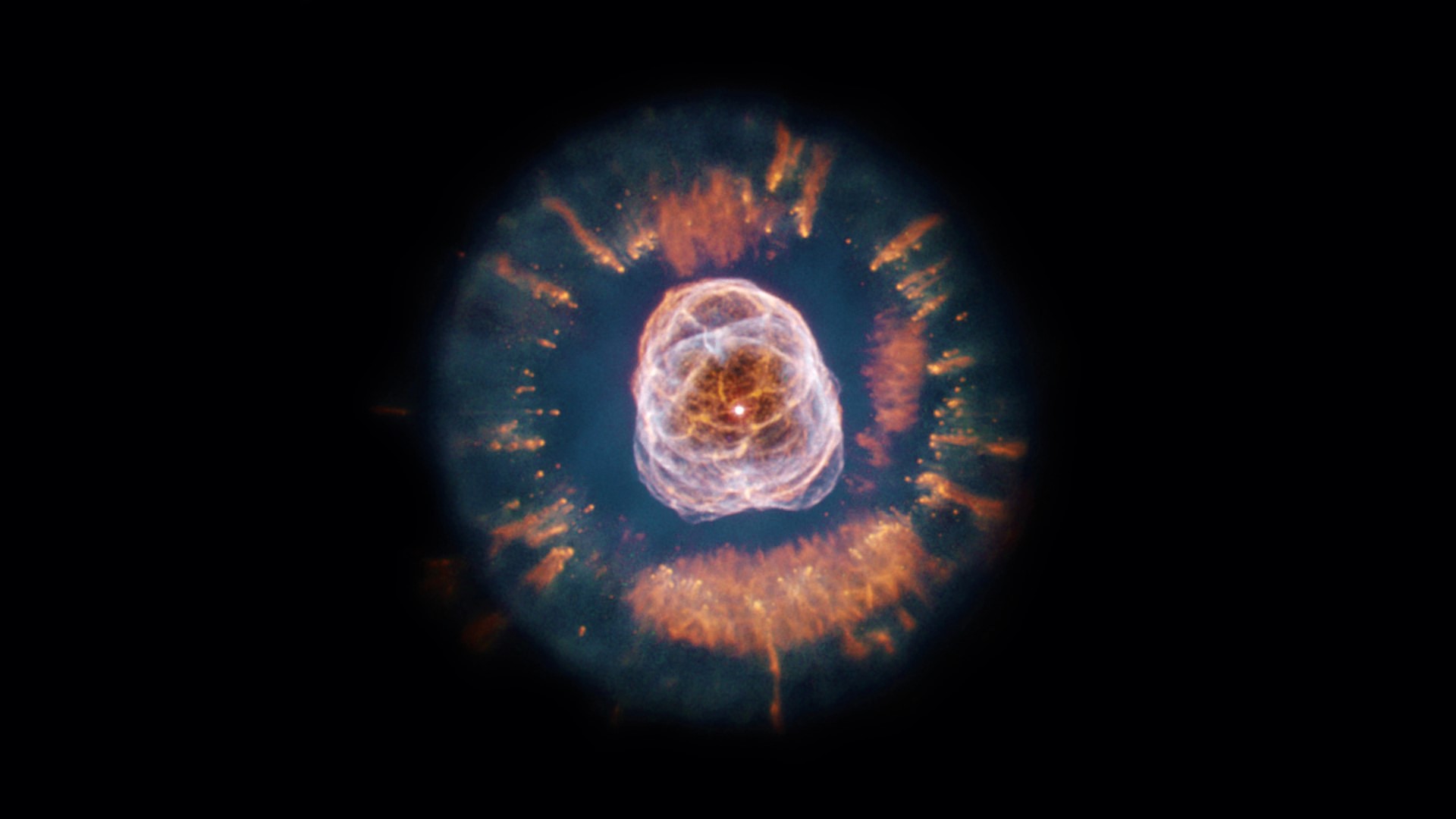
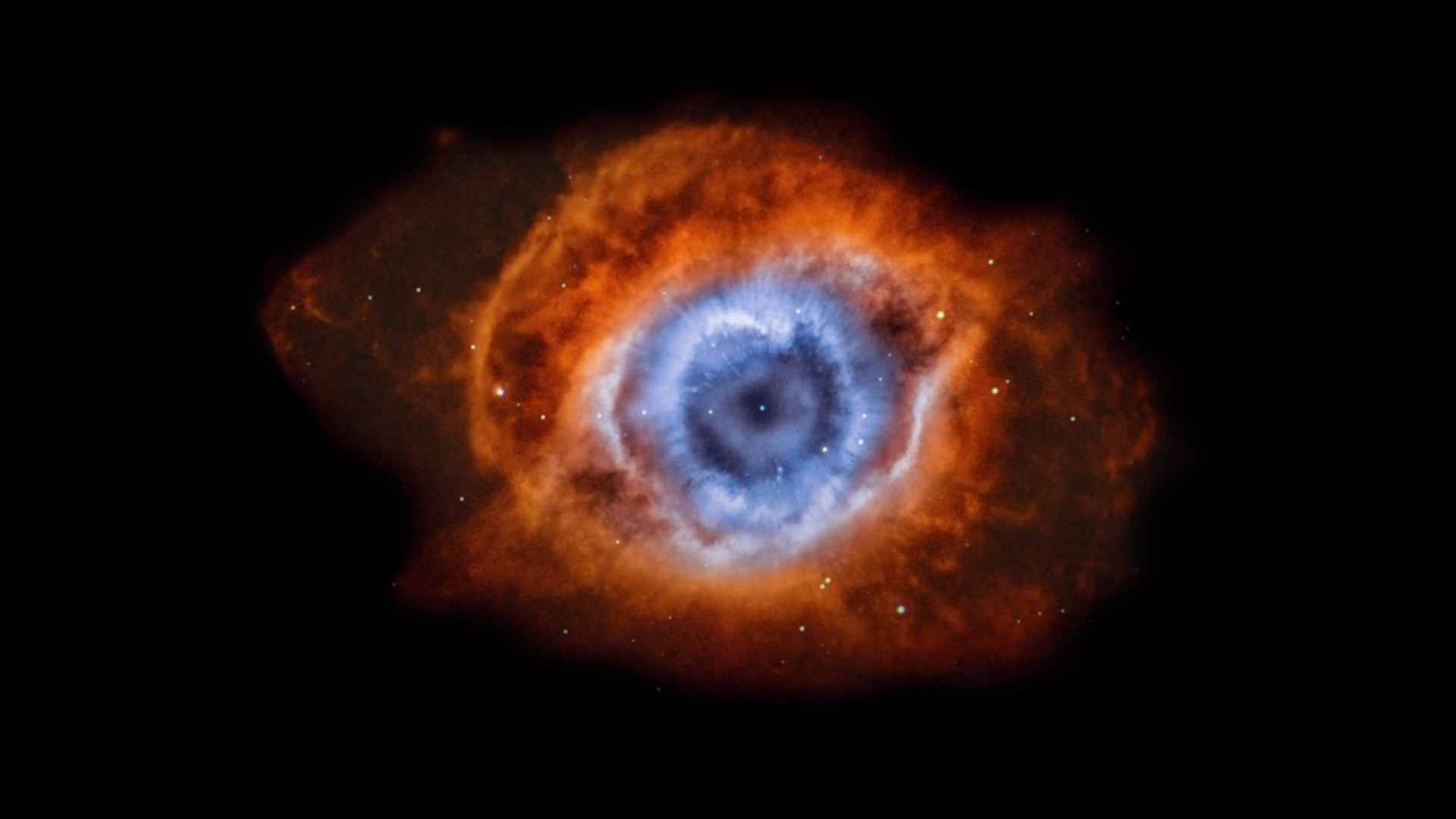
The white dwarf is around 200 times more luminous than our Sun with a surface temperature of 125,000°C, 25 times hotter than our Sun. About 1 light year across and 2000 light-years away. Click on the image to zoom in and out of the nebula. Zoomed in the red outer layer is nitrogen, within that is oxygen in green and the centre in blue is helium. The outer halo (zoomed out) is the hydrogen from the red giant phase of the suns life.
Hubble Space Telescope
This shows the outer halo which is the debris left over from the stars red giant phase over 50,000 years ago, and is 3 light-years across. Click on the image to zoom in and out of the nebula at its centre. The concentric rings are gas shells that formed before the central nebula, periodically forming over about 15,000 years.
Nordic Optical Telescope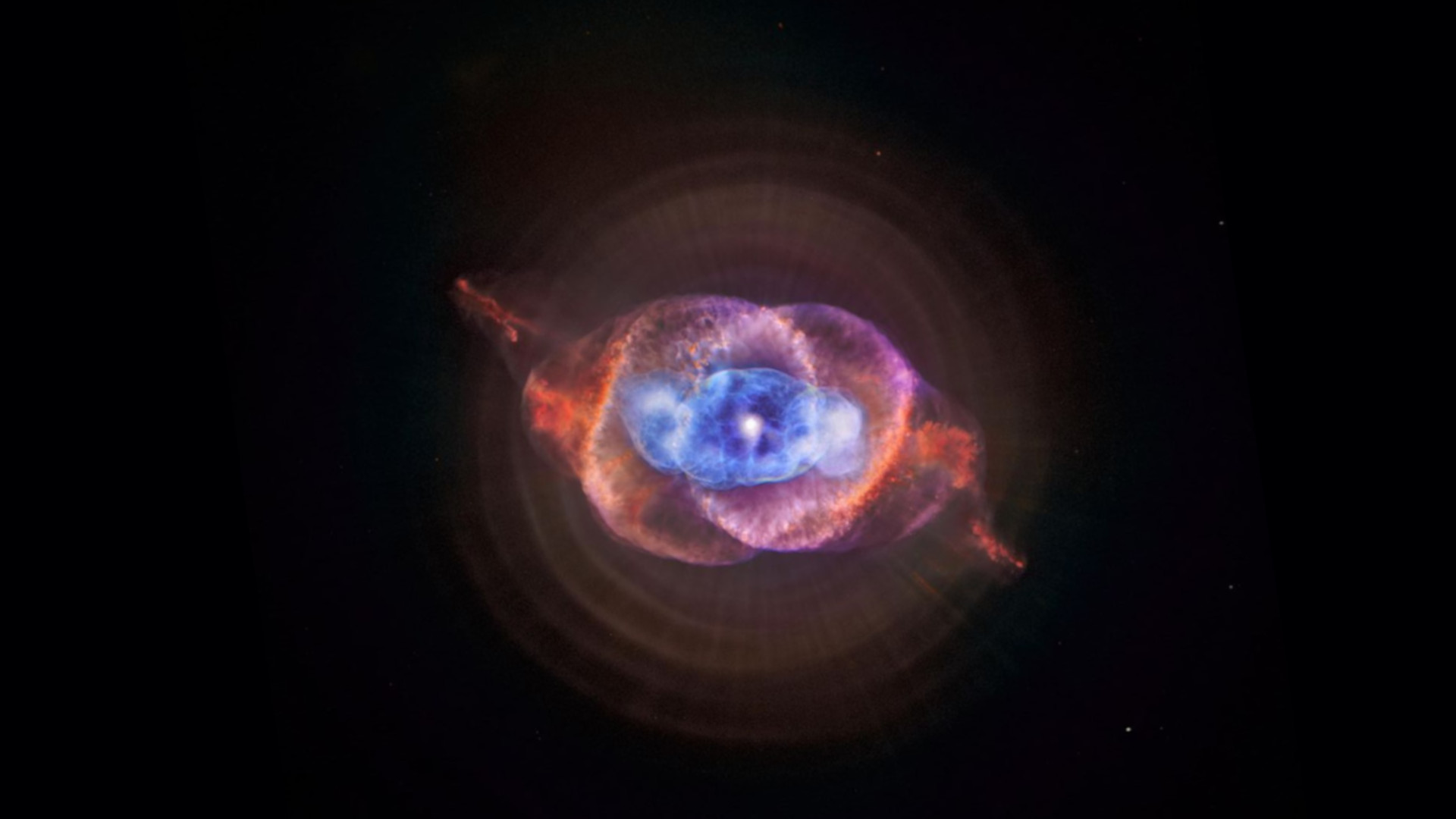
⮘
Another image of the complex Cat's Eye central nebula which formed about a 1,000 years ago, with its Wolf-Rayet Star at its centre, 10,000 times brighter than the sun and originally 5 times the size but now 0.65 and losing about 20,000 billion tons of matter per second as it is thrown out at nearly 2,000 km/s. The 80,000 degree Wolf-Rayet Star will cool to become a white dwarf.
Hubble Space Telescope
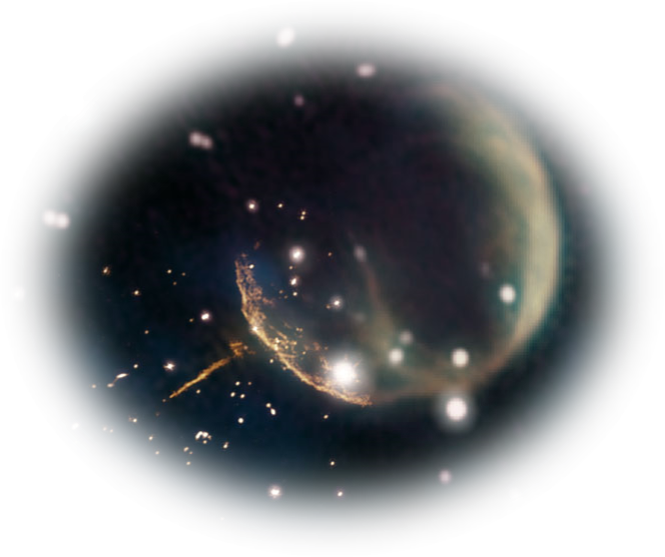
The nebula is nearly 100 light-years across with the progenitor star going supernova about 10,000 years ago, transforming into a neutron star which we can see shooting out of its own nebula (bottom left) at over 1,000 kilometres per second while spinning 9 times a second.
NRAO, DRAO, NASA, J. English
.png)
⮘
5,000 light-years away and over a light year long, it is in the process of changing from a red giant to a white dwarf, throwing off its outer layers at a million mph. It is also known as the Rotten Egg Nebula due to the large amount of sulphur it has created.
Hubble Space Telescope
A planetary nebula consisting of helium, nitrogen, oxygen and carbon ejected material.
Hubble Space Telescope
⮘
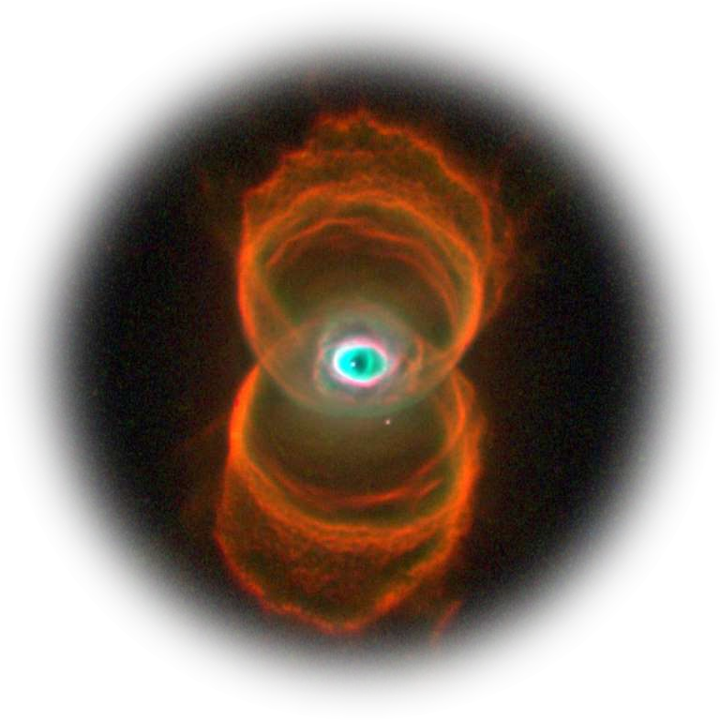
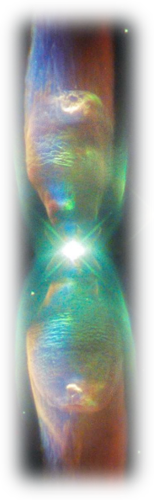
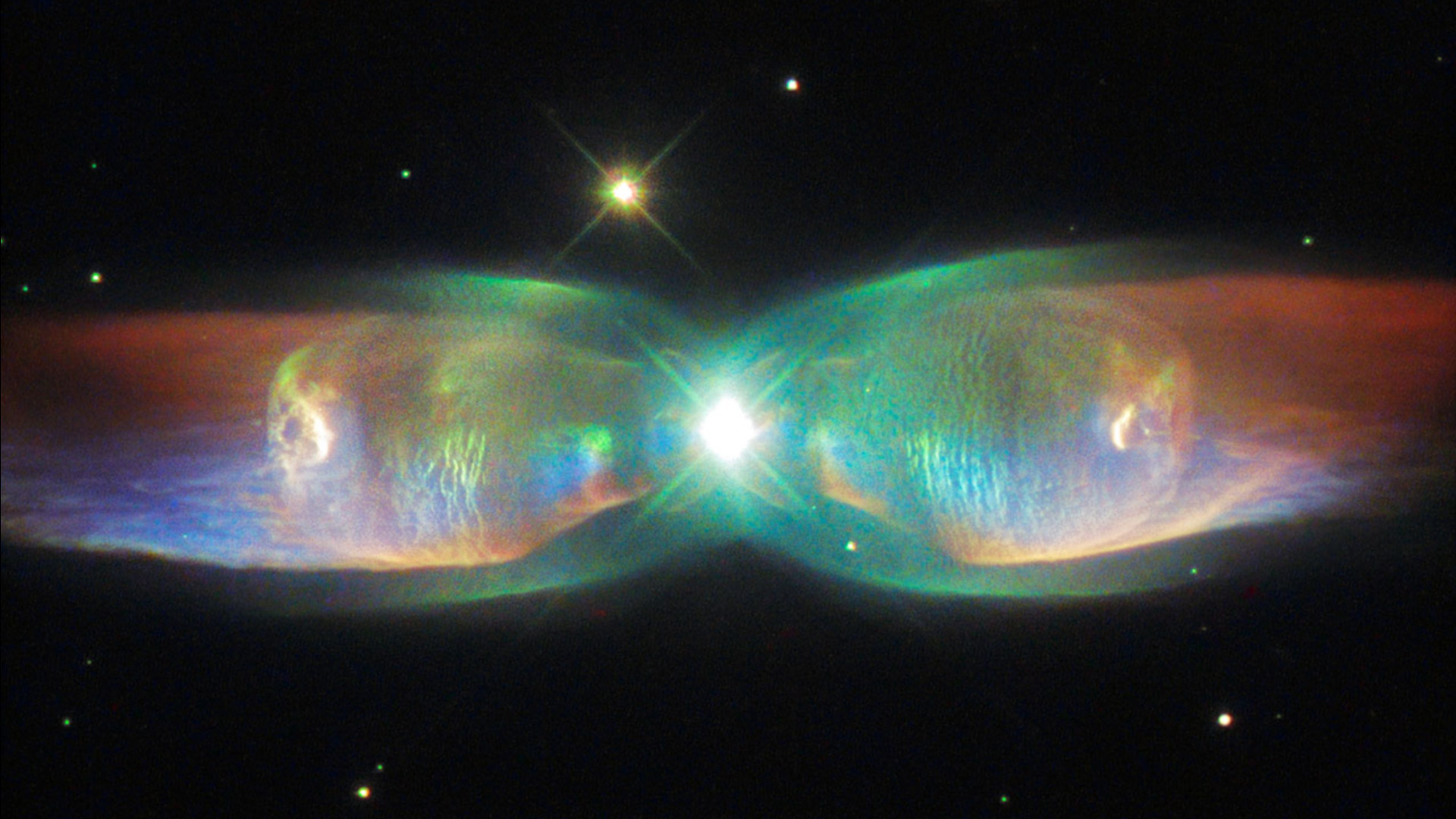
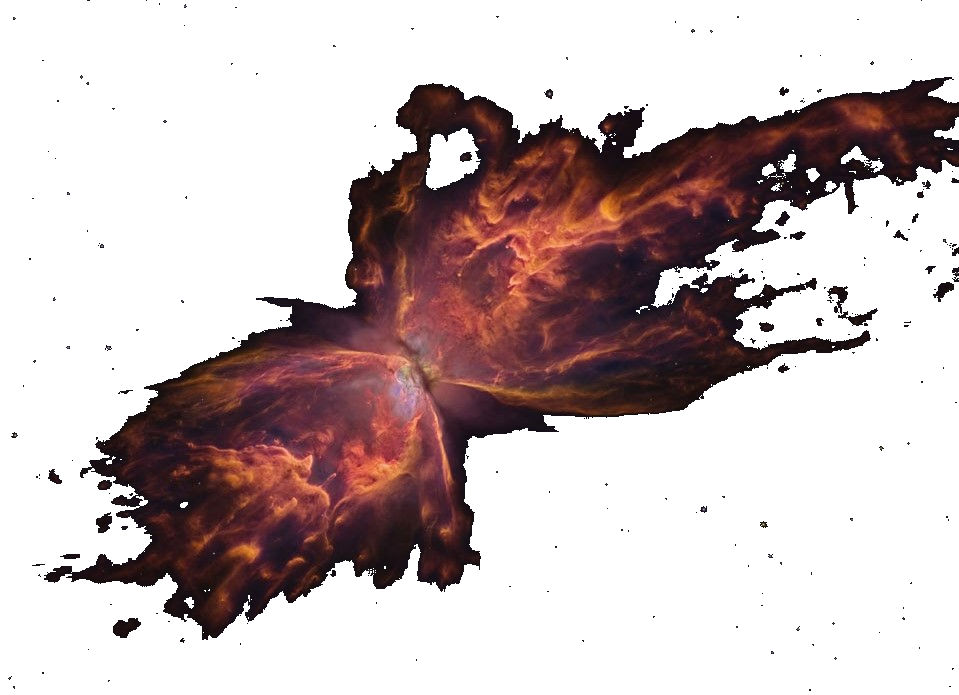
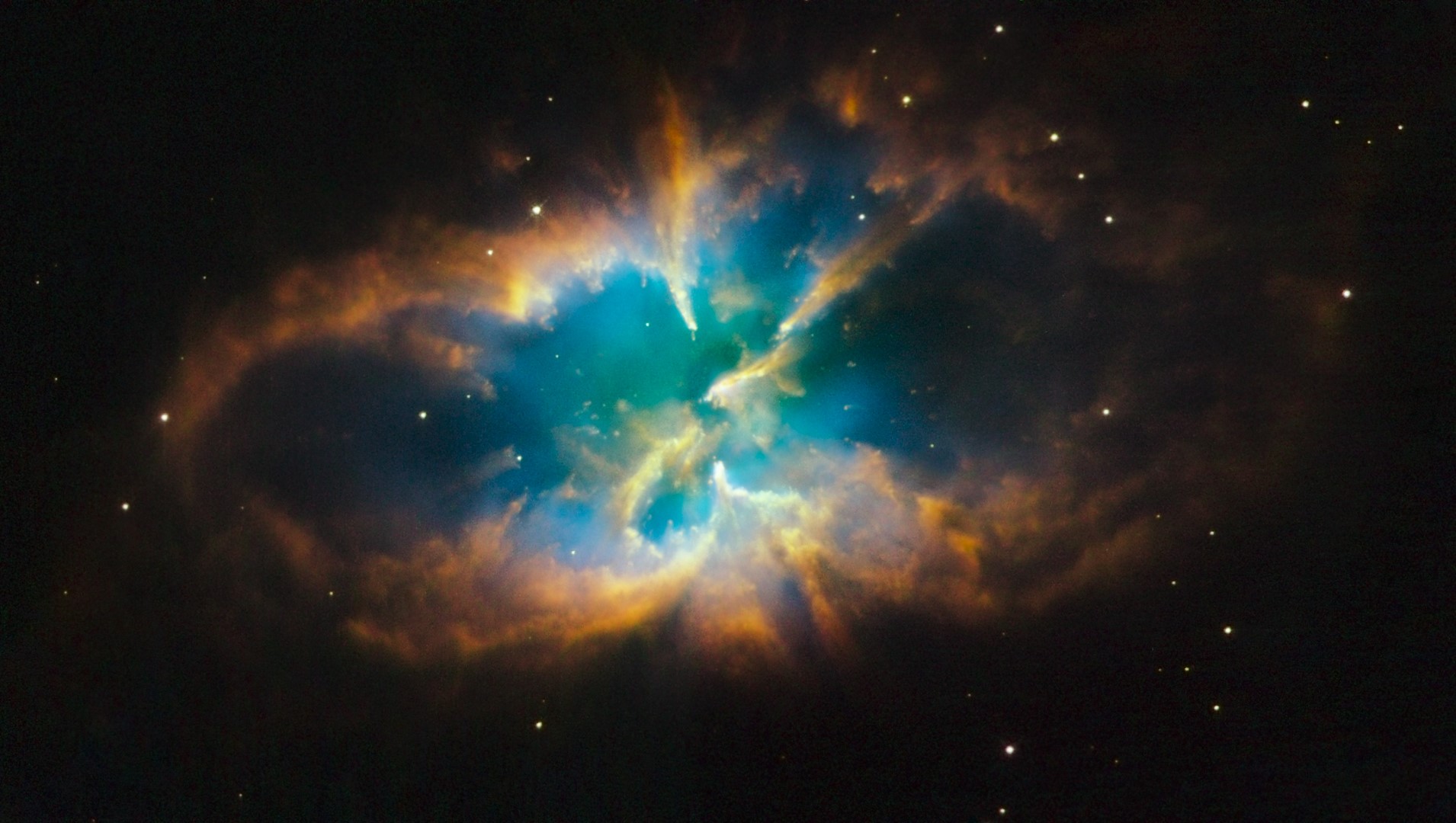
These jets of gas are being thrown out at more than 1 million km/h and have been doing this for 1,200 years. Comprising of a white dwarf and another star in close orbit, interacting to produce this bipolar nebula. Up to a fifth of planetary nebula are bipolar
 Hubble Space Telescope
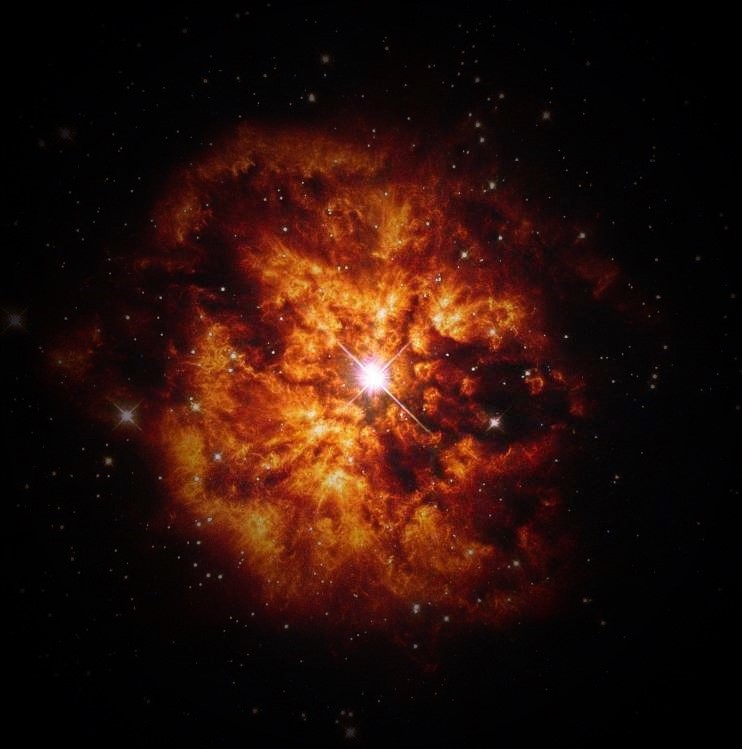
A massive Wolf-Rayet Star 15,000 light-years away with a nebula 6 light-years across which has been undergoing this explosion for 20,000 years on its way to its supernova. 150,000 times brighter than the Sun and 8 times hotter and 20 times bigger, it is less than 9 million years old and won't make 10. Our sun will live a billion times longer and is half way there.
Hubble Space Telescope
⮘
A blue supergiant star that went supernova (type II) in 1987, leaving a neutron star behind. Outside of our galaxy in the nearby dwarf satellite galaxy called the Large Magellanic Cloud, 168,000 light-years away.
Hubble Space Telescope
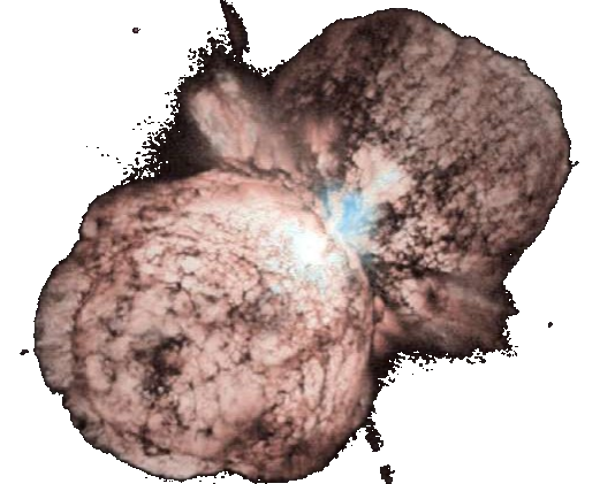
A Type V supernova. Eta Carinae is a stellar system containing two massive stars outputting a luminosity greater than five million times than that of our Sun. 7,500 light-years away and erupting a number of times, it will most likely form a black hole.
Hubble Space Telescope
⮘
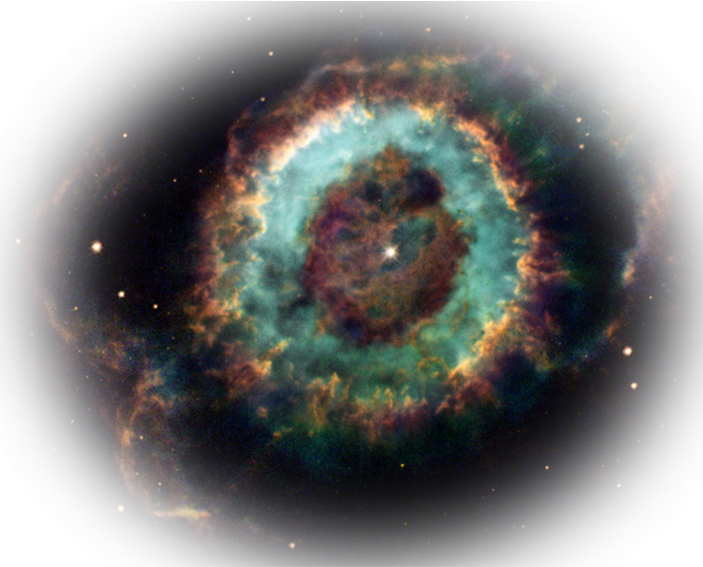
About 2 light-years across, the nebula is expanding at about 24 kilometres per second but it is approaching us at approximately 106 kilometres per second. Blue shows oxygen, green shows hydrogen and red shows nitrogen. It is the white dwarfs ultra-violet light that makes the expanding gasses glow by ionising the atoms.
Hubble Space Telescope
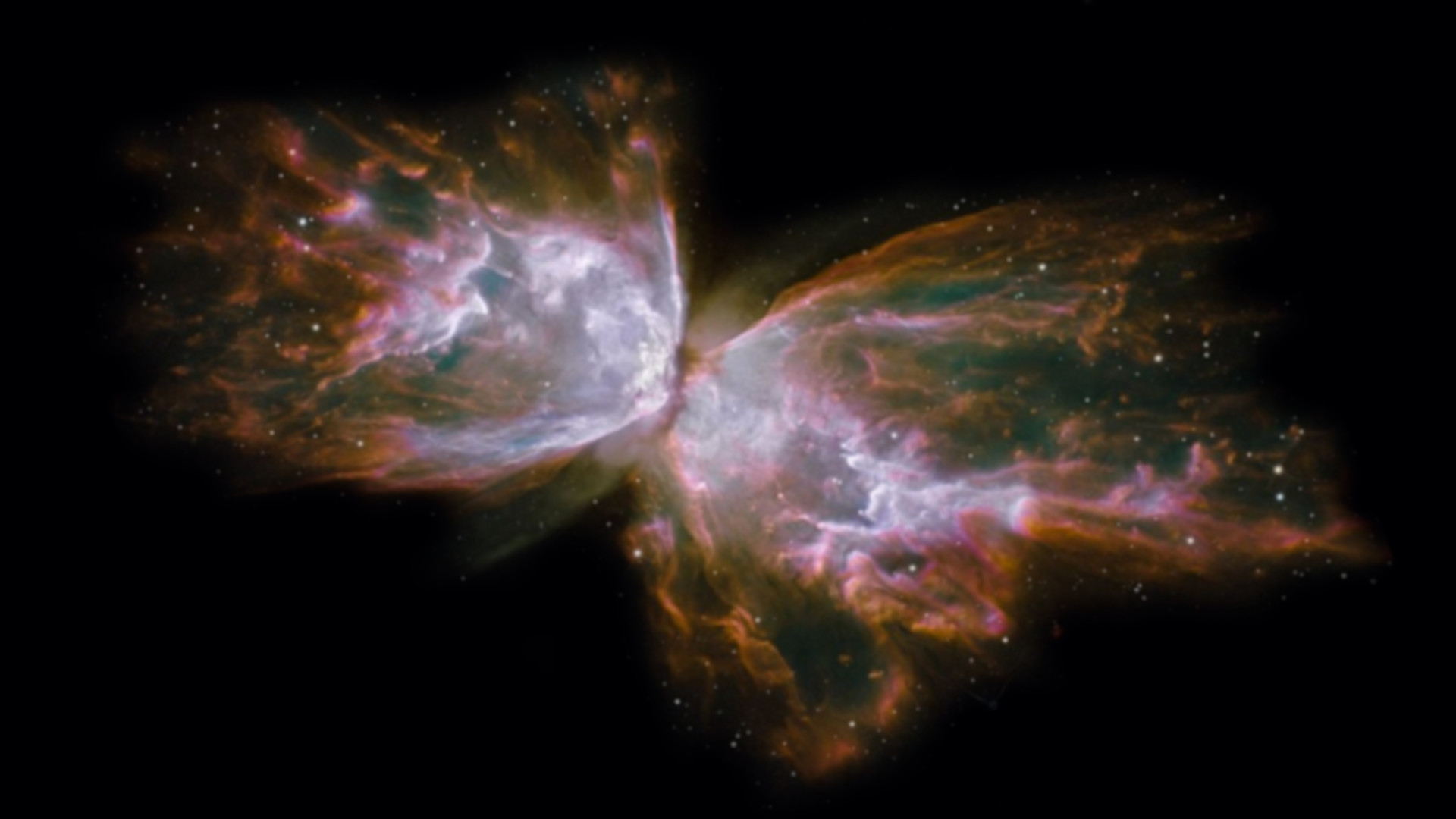
3 light-years across and nearly 4000 light-years away the white dwarf is over 200,000°C blowing out at 600,000 mph.
 Hubble Space Telescope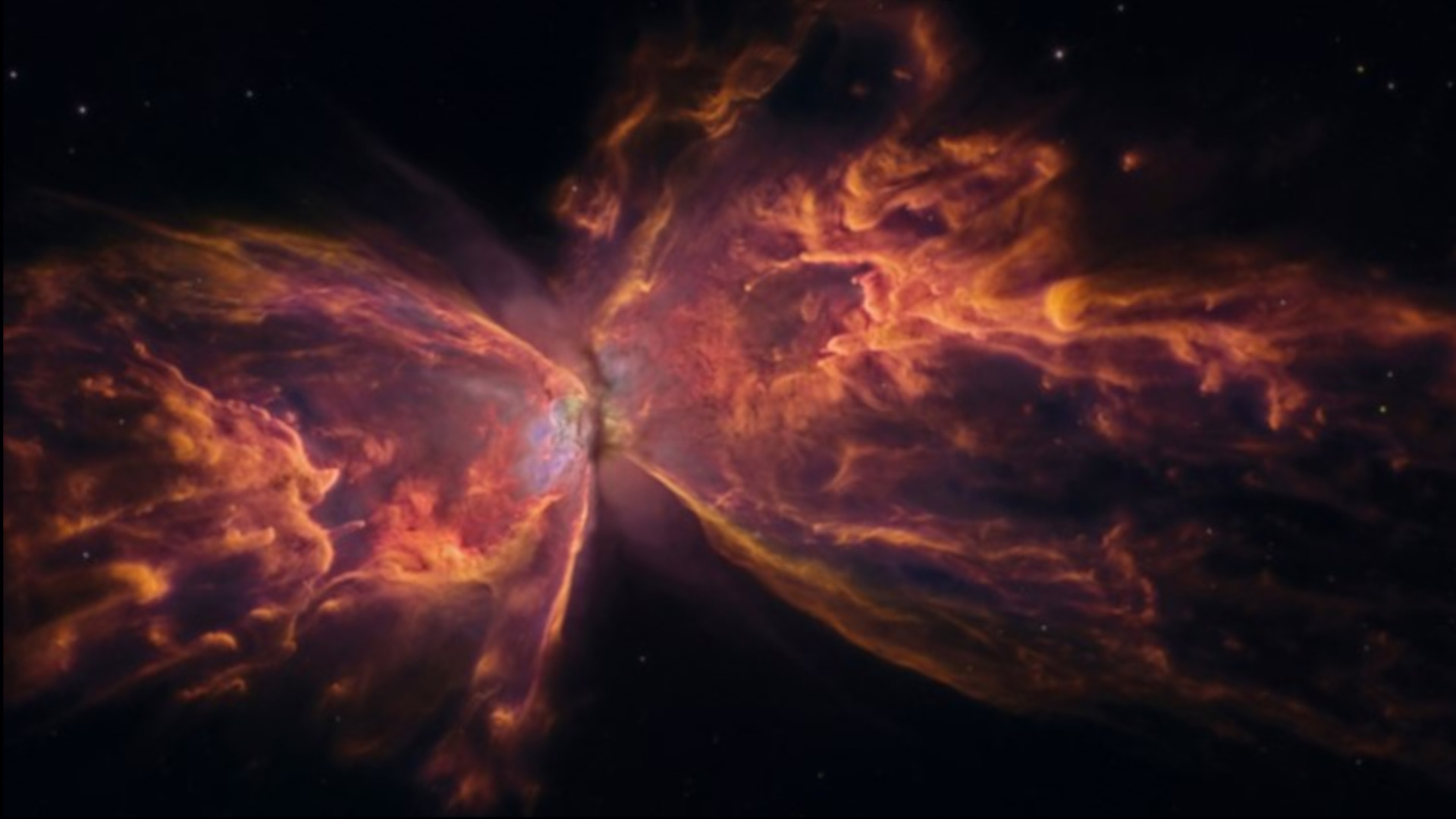
⮘
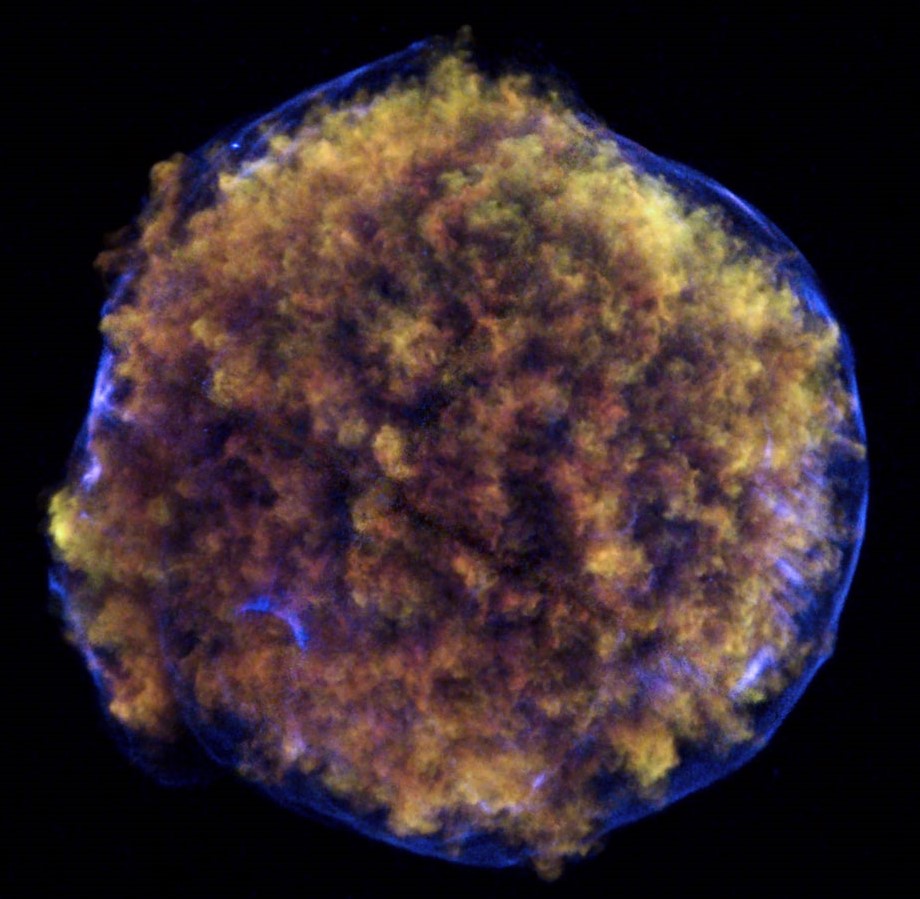
A supernova type 1a recorded in 1572. This type happens when a planetary nebula white dwarf is assisted by a companion star to go one stage further to become a neutron star and is used as a standard measurement of distance in cosmology.
Chandra X-ray Observatory
The light from the central white dwarf excites the atoms in the nebula causing them to glow
Hubble Space Telescope
⮘
Over 5000 light-years away. The outer filaments are about 1 light year long. Showing nitrogen (red), hydrogen (green), oxygen (blue), and helium (violet).
Hubble Space Telescope
A planetary nebula about 650 light-years away and 4 light-years across. The star in the centre is a white dwarf and its outer shell which has been shed shows oxygen in blue and hydrogen in red.
 Andrew Campbell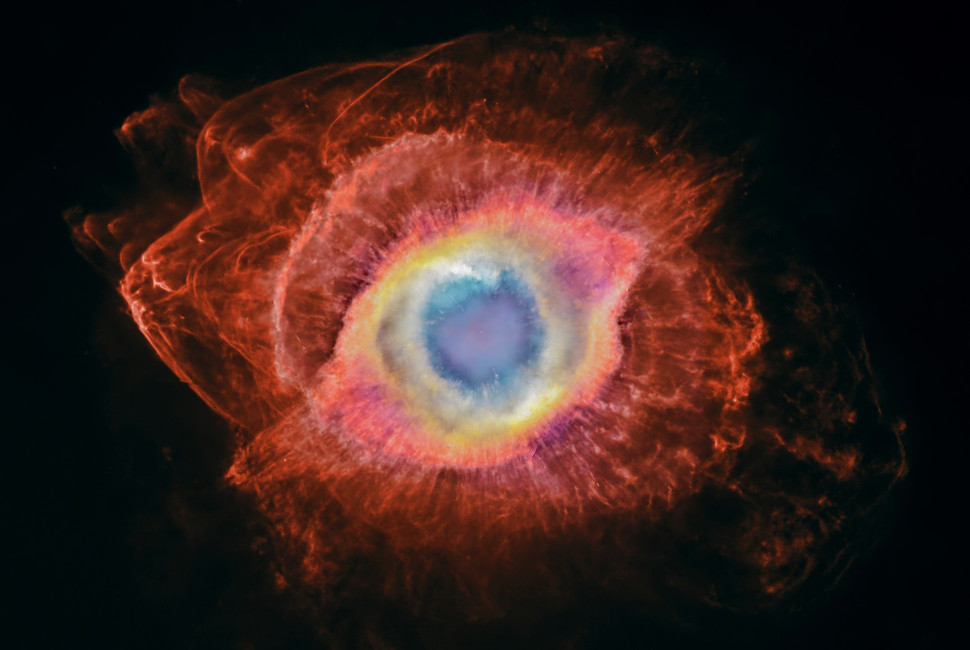
⮘
A planetary nebula.
Hubble Space Telescope
The Vela pulsar is the remnant from a star that went supernova 12,300 years ago. It is over 800 light-years distant but was still able to affect Earth, increasing carbon 14 by 3% in our atmosphere.
The neutron star is spinning 11 times a second and sounds like this...
Chandra X-ray Observatory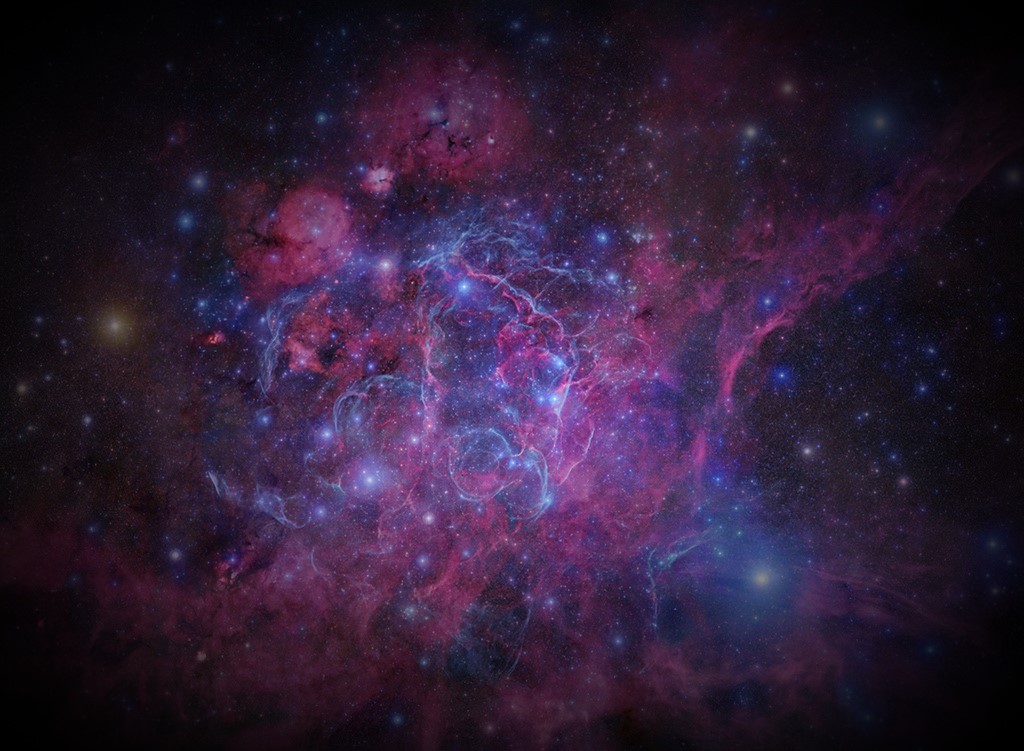
⮘
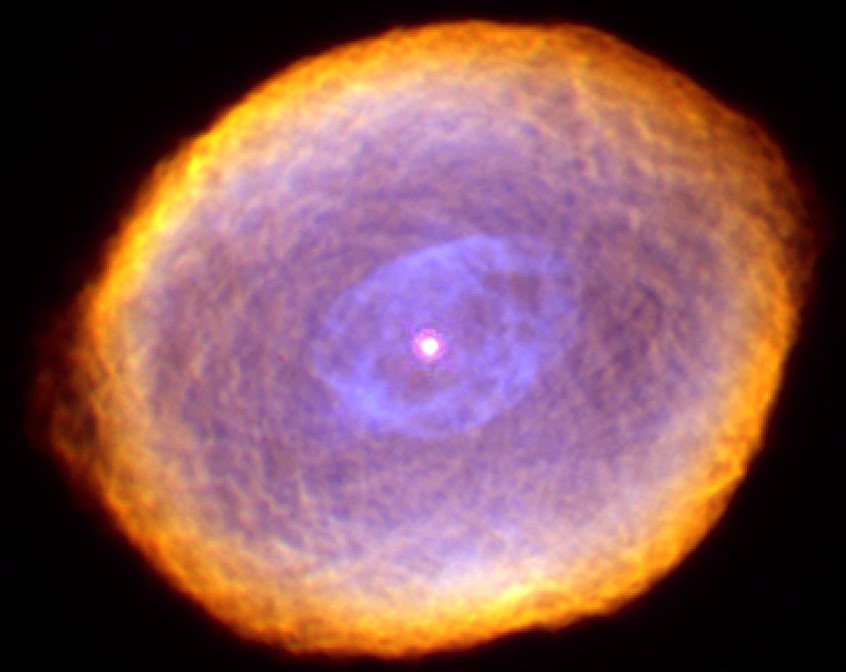
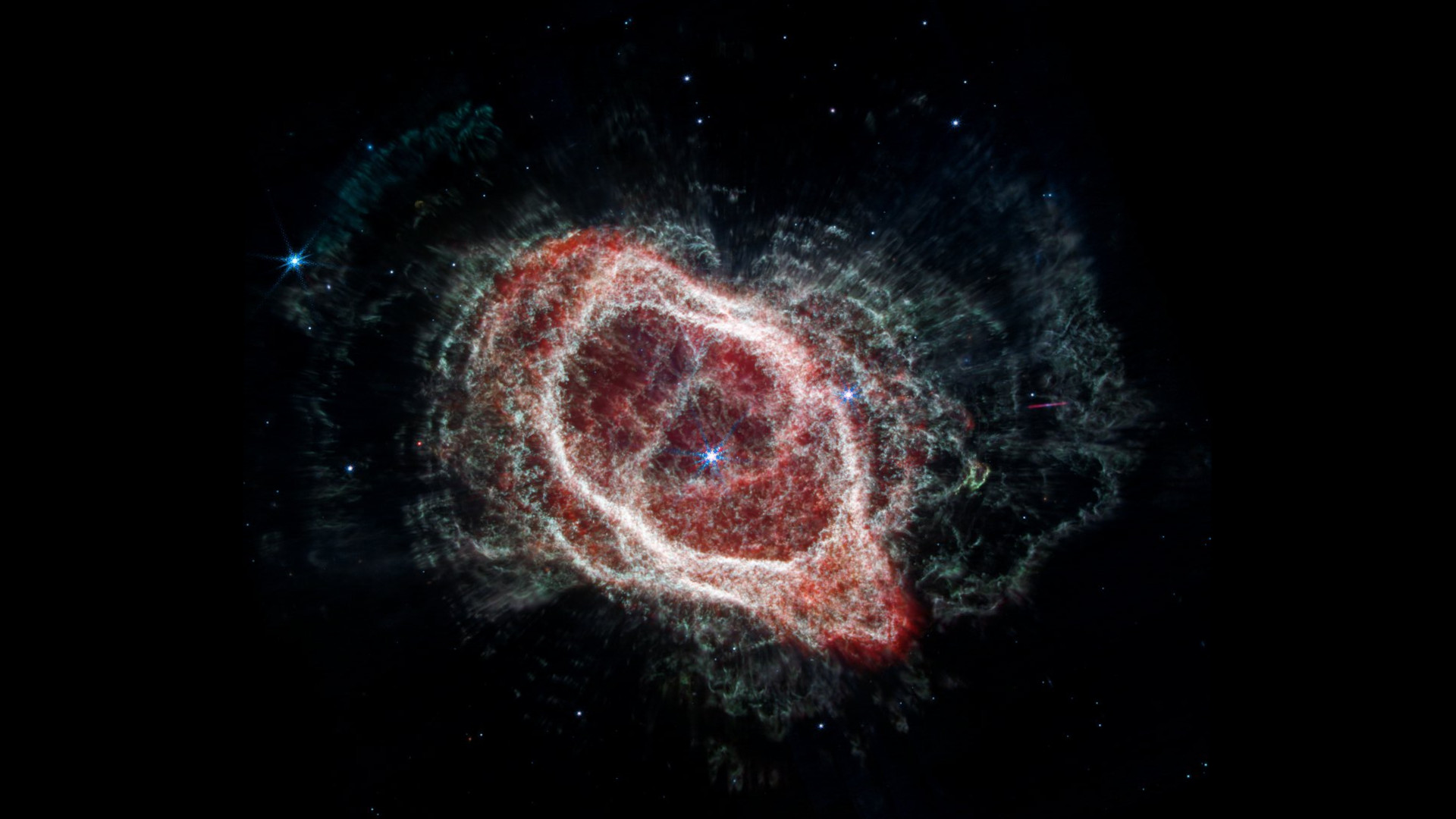
Also in the Vela constellation, this actually has 2 rings and believed to have 3 stars at its centre, one of them being the white dwarf that remains from the nebulous expulsion.
HST ↗ JWST
~
Stars are the factories for producing the different atoms of which our world is made up from, and their bursting is a bonanza pay day showering the galaxy with the material to make new worlds.
Hydrogen becomes Helium which turns into carbon and oxygen. The carbon fuses into neon, sodium, magnesium and aluminium, while the oxygen produces silicon, sulphur, argon and calcium, and then the silicon makes nickel which turns into iron. Iron cannot fuse into a larger element in this process, but when the star is big enough its gravity forces the core to atomically collapse and the electrons join with the protons to form neutrons, making the star shrink towards its centre at 70,000 km/s until it effectively becomes a giant single atomic nucleus, 10 miles wide known as a neutron star. The outer layers explode outwards in a supernova.
Hubble Space Telescope
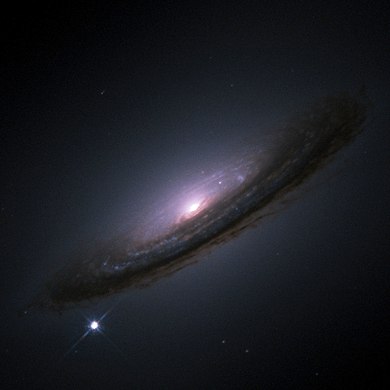
The above image of a type Ia supernova, SN 1994D (bright spot lower left), within its host galaxy NGC 4526, 55 million & away, shows how bright a supernova really is.
There is evidence to show that there was a relatively nearby supernova 2.5 million years ago that affected the Earth, possibly causing extinctions. There is also trace effects from the Vela supernova which is more than 800 light-years away and one of the closest ones to us, while a supernova within 50 light-years of Earth could easily strip away our ozone layer causing rampant UV levels with catastrophic effects.

About 1% of the 3000 known neutron stars have incredibly strong magnetic fields which we call magnetars, which are so powerful that an atom would have its electron cloud disrupted from 1000km away! Imagine what that would do to us: puff! Magnetars have recently been identified for being the source for “fast radio bursts”, of which about a 1000 have been catalogued. In 2004 a gamma ray burst from a magnetar 50,000 light-years away, made our ionosphere expand. The star-quake released more energy in one-tenth of a second than our Sun releases in 150,000 years. But that's nothing compared to GRB 221009A (shown below), which in 2022 caused large variations in our ionosphere from 2.4 billion light-years away! If that had happened in our galaxy, the 18 trillion electron-volt discharge means it is unlikely that we would still be here. For these reasons it is not only extra-solar planetary colonisation that we need to do to safeguard life, but extra-galactic colonisation too.
•••
The core of a star needs a temperature of a billion degrees to turn the carbon into iron, otherwise the supernova can't happen and it will stay as a white dwarf and will be inert, incapable of any fusion at its centre and consisting mostly of compacted oxygen and carbon. The white dwarf is very hot and dense and will slowly cool to become a black dwarf which will emit no light, but this takes so long that it is believed that none exist in the universe yet.
The universe—one story—is the process of these stars forming and exploding and turning into us. But when stars are more than 30 times the mass of our sun, they will fail to shed their outer layers in a supernova, which then falls back into the star. The resulting collapse occurs in less than a second and without end into what is effectively the edge of the universe—a black hole. End of story.