Pentegraph Techniques
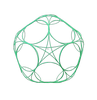
The techniques of Pentegraph have all been discovered serendipitously due to the nature of invention from first principles. The natural geometry produces an over-arching structure that houses the discovery of patterns that lie within.
By creating the form and then letting itself fill in by producing a system of circles and their joining together, it is inevitable that the performances will get better, just by time passing and the increasing of repetitions due to the circular aspect of performance and the infinite path. They will get performed to the point of proficiency simply by the way that that is what happens. It is a strategy. If the forms are true—as they are, due to the sacred geometry—then the path is guaranteed and the vindication of authenticity, is inevitable.
Points of divergence occur where there is more than one way of doing something, but it is too much work to learn every way, and so one particular way comes to be practiced exclusively—this way is known as pentegrade. This will inevitably lead to their being different styles of Pentegraph. I can only do one. An example would be The Gate performed in the opposite direction (contragrade) to the way I always do it (left hand clockwise, right hand counter-clockwise – pentegrade). There will be a number of these style divergences throughout Pentegraph in the future.
Techniques
- Aster – a spherical helix
- The Asterial Echo – one hand one arc behind the other following the path of an Aster. One hand is pentegrade, the other contragrade.
- Coiling the Asterial Visage – Asterial Echo with palms always facing each other around a small orb.
- Exwhyzedex, Whyzedexwhy, Zedexwhyzed – the 3 orientations
- Asterial Prime – single-hand execution of the Aster
- Penter – the path that connects 5 circles
- Pentekirkos – a Penter with closed Kirkoi (the circles are not closed in the Penter)
- Penter Enkirkos – a Penter enclosed by a Kirkos
- Mypenter – a Penter composed of Mykirkoi
- The Penterial Echo – one hand one circle behind the other following the path of a Penter. One hand is pentegrade, the other contragrade.
- Penterexwhy, Penterwhyzed, Penterzedex – the 3 planes
- Penter Exwhy-zedex, Penter Whyzed-exwhy, Penter Zedex-whyzed – the 3 planes rotated around the 3rd.
- Kirkos – the basic circle
- Mykirkos – the size of a circle that produces an Eikosakirkos Orb the diameter of the height of the practitioner (height times 0.35).
- The Kirkostu or Kirkosial Echo – one hand follows the other 1 Arc behind, one hand in front of the other.
- The Olikos Condorkirkos – full size circles with the shoulders yoked.
- The Footstool – the method to alternate the hands in the Kirkostu
- The Exwhyinzed – spiralling Kirkos, one hand behind the other
- The Whyzedinex or Tumbleweed – spiralling Kirkos in paralel moving from side to side.
- The Zedexinwhy or Lassoo – spiralling Kirkos one above the other
- Kirkosinmirror
- Exwhykirkos, Whyzedkirkos, Zedexkirkos – the 3 planes
- Dykirkos – 2 Kirkoi joined within the Penter
- Dykirkosexwhy, Dykirkoswhyzed, Dykirkoszedex – the 3 planes
- Dykirkos Exwhyzedex, Dykirkos Whyzedexwhy, Dykirkos Zedexwhyzed
- Dykirkosinloom – the Cross of Pentegraph
- Dykirkosingate
- The Footstool Dykirkos – the reversal of the hands in the Kirkostu using a Whyzedexwhy Hemaster rotation.
- The Gate – 2 Penters joined together; a Dypenter
- Epikirkoi Gates – Gate, Mirror, and Loom (two Kirkoi overlap)
- Exwhy Gate, Whyzed Gate, Zedex Gate – the 3 planes
- The Canted Gates
- Ascending Canted Gate – The Dragon Climbs
- Descending Canted Gate – The Dragon Swoops
- Zenith Gate – the overhead Gate (only possible with a tilted Pentegraph Orb)
- Hanging Gates – Gates conjoined with the zenith Penter.
- The Tortoiseshell – 3 Penters joined together; a Tripenter
- The Tortoiseshell
- Anabasis Tortoiseshell – Lower Gate with Upper Penter
- Katabasis Tortoiseshell – Upper Gate with Lower Penter
- The Tortoiseshell Dance – an Anabasis Tortoiseshell using one foot and two hands, each to a Penter.
- Tortoiseshell Side Gate – arms do yz gate, leg does xy Penter
- The One Armed Tortoise – tracing the Tortoiseshell with just one arm
- The Dying Tortoise – Tortoiseshell Dance lying on back, feet together
- The Turtles Tortoise Shell Dance – Tortoiseshell Dance lying on back, hands together
- The Tortoise's Paws – an equatorial Trikirkos, a holding pattern pause pending Canted Gates.
- The Tortoiseshell Dragon – Dragonfly on the Gate, alternating with left and right Canted Gates.
- The Squashed Tortoise – the Open Gate with a Penter in the middle.
- The Dragonfly
- The Dragonfly on the Gate
- The Dragons Wings – Dragonfly on the Open Gate
- The Dragon Opens the Gate – Transition from Lower Gate to Open Gate
- The Dragon Flies Eastward – a Dragons Cage Orb traversal
- The Dragon Climbs: the left (ascending) Canted Gate with Dragonfly.
- The Dragon Swoops: the right (descending) Canted Gate with Dragonfly.
- Dragonfly over the Pond – Zedex Gate Dragonfly style
- The Hawk
- The Harpy – Hawk on the (Upper) Open Gate
- Hawk on the Open Gate – as a slow breathing exercise
- The Penterhawk – both hands pentegrade on the same Penter.
- The Asterhawk – an Astergate with both hands pentegrade
- The Echoing Penterhawk – the morphing of the Penterial Echo and the Penterhawk.
- The Hawk's Travels – The transitioning between the Echoing Penterhawk and the Open Gate.
- The Penterhawk Migrates to the Open Gate – the Squashed Tortoise
- The Looming Hawk
- Hawk in the Mirror
- The Cross of Pentegraph – upright Dykirkos within Loom
- The Pentegraph Crossgate – The Loom martial style
- The One Loom – the one handed Loom, alternating Penters through the Cross.
- The Cruciger
- The Dolphin nosed Penter – Moving forward and backwards using Oyster hands
- Rhabdos Techniques – using a wand or baton
- Rhabdosaster
- The Zedexwhyzed – The Aster to the front
- The Whyzedexwhy – using Rhabdoi arms hanging down
- The Exwhyzedex
- Rhabdospenter
- Rhabdosastergate
- Rhabdosdykirkos
- Rhabdosexwhy, Rhabdoswhyzed, Rhabdoszedex
- Rhabdos Exwhyzedex, Rhabdos Whyzedexwhy, Rhabdos Zedexwhyzed
- The Astergate.
- The Asterloom
- The Astermirror – the Astergate but with reversed Anabasis and Katabasis Asters as found in the Mirror.
- The Megaster. Also known as an Asterseal — an Anabasis Aster and Katabasis Aster overlapped. There are 3 Somatic Megasters:
- Encephalic Megaster
- Thoracic Megaster
- Omphalos Megaster
- The Megasterial Echo – the basic method of performing the Megaster.
- The Olikos Astergate – full arm length encircling of body using Whyzedexwhy
- The Somatic Astergate
- The Mesokirkoi Astergates
- Upper Mesokirkos Astergate
- Middle Mesokirkos Astergate
- Lower Mesokirkos Astergate
- The Hawkaster
- Sacral Hawkaster
- Solar plexus Hawkaster
- Cervical Hawkaster
- The Dragonflyaster
- The Condor Passage – various techniques leading into one another, all with the arms remaining yoked
- The Windmill – The Olikos Condorkirkos
- The Crouching Condor
- Crouching Kicking Condor
- The Condorgate – Whyzed Seal
- The Condoraster – Olikoskirkos Aster (an insane, vomit-inducing performance!)
- The Condorpenter – Condor on the Gate
- The Condorgate
- The Tethered Condor Windmill – the tethered in this case refers to one foot resting on a windowsill
- The Wingless Techniques – shoulder only movement, yoked at the clavicle joint.
- The Wingless Condorgate
- The Wingless Condorkirkos
- The Wingless Dragonfly
- The Wingless Hawk
- The Stubby Techniques – elbow traces movement, hands on hips.
- The Stubby Condor – folded arm with shoulder locked, movement of elbow from clavicle.
- The Stubby Dragonfly
- The Stubby Hawk
- Crouching Dolphin
- Looming Dragonfly
- Zedex Dykirkos
- The Condorkirkos – Olikoskirkos loosely yoked, twisting body.
- Exwhy
- Whyzed
- Zedex
- The Tethered Techniques – one leg secured by a hand grasping the foot
- Tethered Kirkos – the free arm does a Whyzed Olikos Kirkos while the other holds foot and extends out and back while also performing a Kirkos.
- The Tethered Dykirkos – the free arm does a Dykirkos while the other holds foot and extends out and back while also performing a Dykirkos.
- The Tethered Penter or Tethered Gate
- Tethered Superman – the upright position between movements
- Tethered Turtle – seated, hands grasping feet outstretched.
- The Tenthimble Gate
- Tenthimble Rhabdoswhyzed
- Tenthimble Rhabdosaster
- Crouching Techniques
- Crouching Superman
- Crouching Dragonfly – various techniques using Dragonfly while crouching
- Crouching Rhabdos
- Crouching Kicking Condor
- Dodekakirkos Gate
- Dodekakirkos Penter
- The Triaster – 3 Asters encompassing a Kirkos.
- Anabasis Triaster
- Katabasis Triaster
- Kirkosaster
- The Doublegate Tortoiseshell
- Trinity Kirkos
- The Penterwalk
- Pelekan Techniques
- The Pelekanaster
- The Pelekanpenter
- The Pelekankirkos
- The Pelekangate
- The Beacon
- The Pelekan Rhabdosaster – Rhabdos held at the hilt with both hands, arms kept straight, full size Aster. The Rhabdos could be a mace.
- Hanging Penterasters (Penteraster Kremastoi)
- The Penteraster Enkirkos – using the Dodekakirkos Kirkos surrounding the Penter as a path too.
- Penter Circambulation
- The Whyzed Thumbgate within the Oyster.
- The Double Gate
- The Dodekakirkos Dolphin
- The Dodekakirkos Pelekanpenter – palms together
- The clam-nosed Dolphin Dodekakirkos Penter.
- The clam-nosed Dolphin Tortoiseshell.
- The Oyster
- The Starfish
- The Clam
- The Oyster Blancmange
- The Many Headed Serpent – the Tenthimble Dykirkos
- Thumbfirst and Thumbafter
- Tri-circumambulation – the strange path that circumnavigates the Orb 3 times before returning to its start point.
- Hidden Tigerlily – The Whyzed Exwhyzedex (breathing technique)
- The Zedexwhyzedexwhy
- The Exwhyzedexwhyzed
- The Thumb Seal – Dragonfly Whyzed Gate (Seal) with fingers in Oyster
- The Palmaster Dance – Coiling the Asterial Visage while moving back and forth.
- Echoing the Mirror – hands chasing around the Mesokirkos
- Butterfly on the Gate – hands only Thumbfirst/Thumbafter.
- Looming Butterfly – hands only
- Flapping Dykirkoi
- The Dying Dragonfly – lying on back with all four limbs doing Gates
- The Dying Tadpole – lying on back, feet together tracing Aster, hands behind head.
- The Tenthimble Thumbandforefinger
- Kirkos
- Dykirkos
- Mirror 5
- Aster
- The Aetherial Piano
- The Aetherial Harp
- Dragonfly in the Mirror
- Condor on the Closed Gate
- Hawk on the Gate
- Hawk in the Mirror
- The Hawk Looms or Looming Hawk
- The Hawk exercises its wings (on the Gate)
- The Penterhawk
- Penterhawk Anabasis
- Penterhawk Katabasis
- Going through the Open Gate – transitioning to the Penterhawk from the Open Gate.
- Crouching Tumbleweed – the Whyzedinex while crouching
- The Trinity Dykirkos – basic warm up exercise
- The Crab – going up and down stairs on all fours, forwards and backwards.
- Open Mirror Hawk Zedex – the Open Mirror occurs in the Mirror Orb
- Mirror Dragonfliesedex – Mirror Dragonfly Zedex
- The Olikos Dodekakirkos Penter Dolphin
- The Somatic Olikos Aster – Aster encompassing the entire body
- The Dragons Talons – a smaller version of Dragon Flies Eastward, using grabbing and clawing motions by adding Whyzed and Zedex to the Exwhy performance.
- The Rapier Penter – the Penter performed qiuckly with a Rhabdos by the hilt.
- The Dragon Steps Up
- The Hawk Steps Up
- The Dragon Steps Up on the Open Gate
- The Disintegrated Megaster – An Astergate performed with a Canted Gate as the template
- Coiling the Asterial Visage – Asterial Echo with palms facing each other.
- The Penter of ORBIT – the abdominal mapped Penter.
- The Zedexwhyzed Anabasis Asterial Echo – the basic performance of the Aster, and a badge of Pentegraph
- The Triadykirkos – 3 dykirkoi performed with leg and 2 arms – warming up exercise
- The Hawk Closes in – transitioning between Hawk on the Open Gate to Penterhawk and back. Utilising the 4 Equatorial Kirkoi.
- Crouching Kicking Condor – crouching on one leg and kicking the other's foot upon rising whilst the arms rotate 180º in Zedex Condor.
- Penterial Echo – one hand follows the other 1 Stroke behind using the Penter Gyre. One hand pentegrade, the other contragrade.
- Asterial Echo – one hand follows the other 1 Arc behind using the Aster Gyre.
- Kirkosial Echo – one hand follows the other 1 Arc behind
- Dykirkosial Echo – one hand follows the other 1 Arc behind
- Footstool – 3 arcs of the Aster, the method to alternate the hands in the Kirkostu
- Foxface – 2 arcs of the Aster, the missing part of the Footstool that reverses the Gyre. A bifurcated Kirkos.
- The Kirkostu – the Kirkosial Echo
- The Tenthimble Pentegraph Cross
- Stirring the Aster of Omphalos – a Megâk technique performed with the left hand
- Stirring the Sacral Aster – a Megâk technique to summon the kundalini dragon, performed with the right hand
- The Song to Summon the Kundalini Dragon – a Glossaster technique of Megâk.
- Alphatheta Aster – 8Hz Aster, necessarily small and done with the hand.
- Dragonfly Odyssey – ensemble of various Dragonfly techniques chained together
- Nadir Asterial Echo – like pulling up a rope from a well, bent over looking down.
- Zenith Asterial Echo – like pulling oneself up a rope, bent backwards looking up.
- The Dragon's Cage – Orb Traversal techniques using Dragonfly
- Myorb – the Pentegraph Orb of the dimensions peculiar to the practitioner (diameter of Orb = practitioners height).
- Tortoiseshell Trikirkos – the path that travels the 3 central Kirkoi of the Tortoiseshell
- The Dragons Feet – Lying upon ones back, using the feet to draw Dragonfly Gates.
- Aster Bicycling – Lying upon ones back cycling, except instead of the usual Whyzed movement, a Zedex is added in the Exwhy rotation producing a Zedexwhyzed Aster.
- Dragonfly over the Pond – Zedex Gate Dragonfly style
- The Hawk Hovers – Zedex Gate Hawk style
- The Tesserpenter Tortoiseshell
- The Tesseraster Tortoise – 4 Asters connected in the Pentegraph Orb, and the hub for the 4 Penter Tortoiseshell. Can only be performed lying upon one's back — or in space.
- The Walls of Pentegraph
- Dragon Wall
- Dragon Wall Eastward – Dragon Flies Eastward along the Wall
- The Whyzed Wall of Dragons
- Mirror Kremastoi – pendent mirror, pelvic pivot.
- The Olikos Condor Kirkostu
- Transcending to the Inner Circle or Shaving the Penter – the Penter turning into a pentagram due to speed of performance.
- Shaving the Aster – the Aster turning into a flat pentagram
- The Echo of the Dragon Flying Eastward – Dragon Flies Eastward with left hand contragrade following the right hand.
- The Hemi-Penter Gate – 2 half Penters conjoined, one hand performing.
- The Unhinged Gates – freestyle Penters with both hands.
- The Four Gates – the upper and lower Gates, and the two Canted Gates as found in the Orb.
- The Overhead Gate – not to be confused with the Zenith Gate which has only one Penter overhead. Found in the tilted Pentegraph Orb.
- Drawing Power from Heaven – Dragonfly Canted Gates: Dragon Climbs and Dragon Swoops
- Archangel Aster – an Upper Hawkaster culminating from the ensemble Two Gates.
- Open Bottom Doublegate Tortoiseshell – the Big Thumb
- The Penter Transit Trikirkos – boundary of the Penter transit between upper and lower Penters
- The Tortoiseshell Dragon – 2 Canted Gates with either an upper or lower Gate
- Swimming up to Heaven – the Zenith Gate Dragonfly
- Aster pressups
- Penter pressups
- Kremastoi Penters
- Kremastoi Mirror
- Penterneck – tracing Penters with the head for neck exercise
- Twisting Dykirkos – the Cross of Pentegraph done to one side and then switching to the other side
- The Gate's Hinges –
- The Tortoise's Paws – an equatorial Trikirkos, a holding pattern pause between Canted Gates.
- Penter Transit Trikirkos
- The Dragon's Gateway
- Pentegraph Console – The Oyster from which Pentegraph finger Artefacts are practiced.
- The Squashed Tortoises Paws – the 4 equatorial Kirkoi of the Open Gate
•••
Artefacts
Major Artefacts
The Major Artefacts are the fundamental structures that lie at the heart of Pentegraph and effectively create Pentegraph.
Minor Artefacts
The Minor Artefacts are parts of the Major Artefacts and are constituents of their performance.
The Penter Parts
- Kirkos – the fundamental circle that underlies it all
- Dykirkos – 2 Kirkoi as a figure 8
- Trikirkos – 3 Kirkoi, two 8's joined together
The Aster Parts
- Arc – half a circle
- Stroke – a bifurcated circle within the Aster
- Kirkostu – 2 Dykirkoi using the Footstool
- Hemaster – half an Aster
Conjoined Artefacts
The Conjoined Artefacts are conglomerates of the Major Artefacts and are extensions of their performance.
- The Gate
- The Mirror
- The Loom or Closed Mirror (in Megâk) or The Pentegraph Crossgate
- The Seal or Closed Gate
- The Tortoiseshell
- The Pentegraph Orb
- The Astergate, Asterloom, Astermirror, Asterseal
- The Megaster – Asterseal, the Aster equivalent of The Seal or Closed Gate
- The Penteraster – the Penter and Aster combined.
- The Unhinged Gates – any number of partially formed or disjointed conjoinings.
Apocryphal Artefacts
The configuration of the components within the Artefacts or Pentegraph Orb which do not have a performance associated with them — yet.
- Tesseraster – 4 Asters
- Tesserkirkos – 4 Kirkoi
- Dyaster Dykirkos – 2 Asters 2 Kirkoi
- Triaster Tesserkirkos – 3 Asters 4 Kirkoi – the Trikirkos Shield
- Dyaster – 2 Asters
- The Triaster
•••
Netface Search
Defunct due to Google having unindexed most of this site because it doesn't have much traffic, making it so this search will not work well.
Most of the web is now no longer searchable.