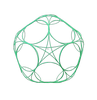
The Gates of Pentegraph

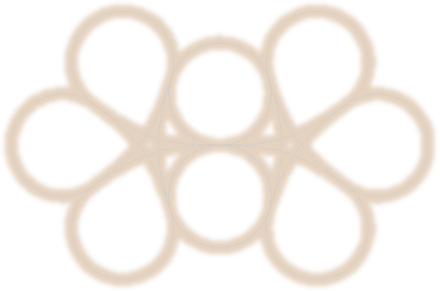

There are 12 Penters in a Pentegraph Orb, all of them overlapping with another Penter with 2 circles. These are the Gates to the Pentegraph Orb.
The Gate is the performance of two Penters simultaneously. Two paths are joined into one producing the synchronizing of the left and right sides of both body and brain.
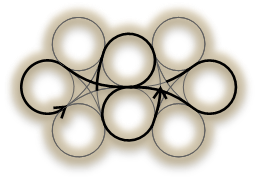
It is a performance of rotating figures of eight, which occur five times before returning to their starting point. The eight's are interlinked asynchronously in Dragonfly style, and rotate clockwise for the left side and counter-clockwise for the right side in this configuration and method, which is known as Pentegrade.
Making eight circles a second (8Hz), produces the dominant Schumann frequency of the Earth, and is an advanced technique called the Geight.
The performance of the Gate produces an independence of the arms, with the accompanying playful interaction between them as they feed off each other creating pulls and pushes, and a rubato tempo, fluctuating in speed and places of their paths. The 2 circles described by the arms during the performance can be mentally linked, each pulling/pushing the other with a hikite action.
The arms are not separate from the body of course, and our tensegrity structure means that the arms movements are transmitted throughout the body and only end at the bottom of the feet and our contact with the ground. The feeling of this in the feet can be bounced back up the legs creating a mirroring of the action performed in the ankles and knees and hips. It can also be prevented from continuation by muscular resistance in the shoulders, hips, knees, ankles and feet. Either way there is a complete body work out to be experienced by the movement of the arms. The Penters that are the paths of performance, can be indefinitely pursued as they are of a repeating nature. When integrated within the Pentegraph Orb, this produces exercise in every direction by an ordered method in a perpetual way, allowing a great many repetitions to be made which is the basis behind most exercise.
The Penters join together to form Gates which can be performed in a multitude of different ways, including their Whyzed and Zedex positionings which lead outside of the Exwhy plane constrained by the surface of the Orb.
~
Showing an Upper Gate and a Zenith Gate within an icosahedron of circles: The Eikosakirkos Orb.
The six horizontal Gates within the Pentegraph Orb.
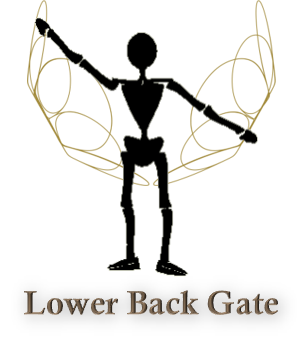
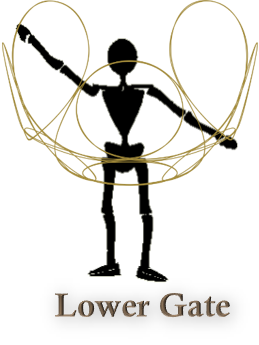
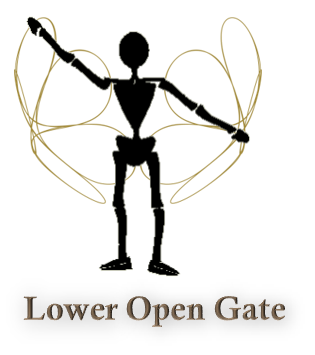
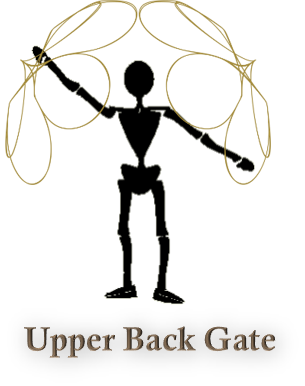
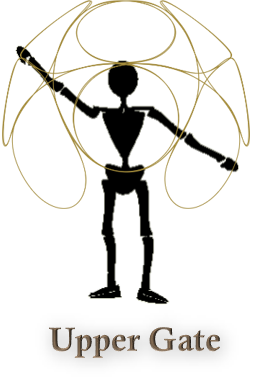
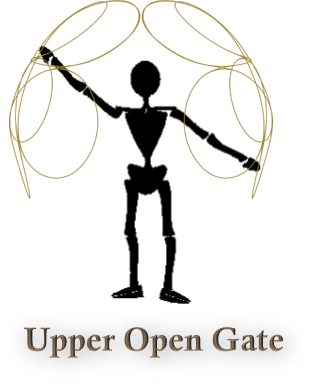
There are nine types of Gate in the Pentegraph Orb (the two Canted Gates and the Zenith Gate are not shown here), the 10th Gate cannot be performed due to having to stand inside the Nadir Penter. The Back Gates have to be performed with the Dragonfly style as dislocated shoulders would probably result from a strict Hawk style!
~
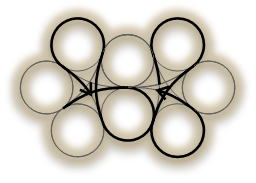
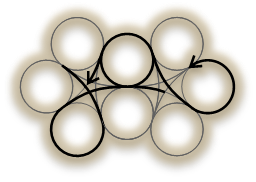
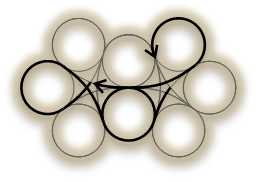
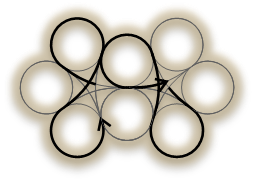
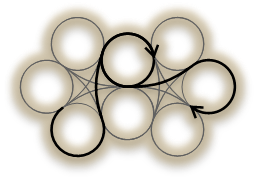
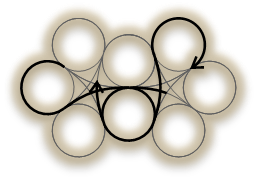
Showing the progression of the synchronous eights that are performed with both hands, following the Pentegrade ambit within a Gate.
~
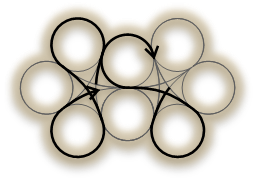
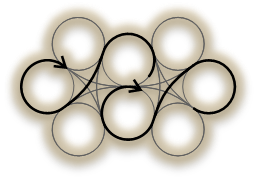
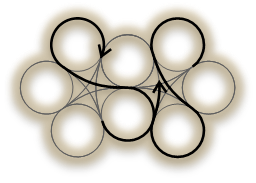
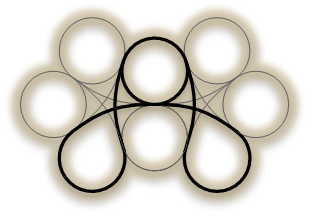
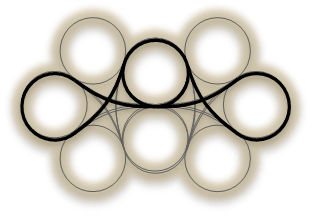
Showing a different presentation of the same progression.
~
~
This performance above is in the Dragonfly style, with the two movements being asynchronous - the left being one circle behind the right. The overall rotation around the Penter (the ambit) is clockwise for the left hand and anti-clockwise for the right hand; this is known as Pentegrade.
~
You go through the Gate to get to any of the other symbols.
As the two comprising Penters move together to overlap one another, their continuation produces the configurations of the Gate, the Deka (Closed Gate or Seal), the Loom (Closed Mirror), and the Mirror respectively, as demonstrated above and below. Only the Gate and Open Mirror occur in the Pentegraph Orb. The other configurations are hidden inside the geometry and revealed in Megâk.
~
The Canted Gates
In the other Gates there are always two Penters of the same hemisphere — two Anabasis Penters in an Upper Gate, two Katabasis Penters in a Lower Gate. The Canted Gates allow the practice of a different Penter for each hand.
The Canted Gate is a slanting Gate consisting of an upper Penter and a lower Penter, which join together diagonally. The Canted Gates are distinguished by which hand performs the upper Penter: the Ascending Canted Gate has the left hand above; the Descending Canted Gate has the right hand above. There are ten Canted Gates in the Pentegraph Orb: five Ascending and five Descending.
The Ascending Canted Gate
The Ascending Canted Gate (above) is also known as The Dragon Climbs, and can be a transitionary movement between a lower Gate and an upper Gate in the Tortoiseshell Dragon, Orb traversal, or Dragon Flies Eastward. In this case the left hand has moved to an Anabasis (upper) Penter, while the right continues with a Katabasis (lower) Penter. In the Dragon Flies Eastward it is always the left hand that imitates the transition to a Canted Gate.
The Descending Canted Gate
The Descending Canted Gate (above, and also known as The Dragon Swoops), can be used to transition from an upper Gate to a lower Gate in the Tortoiseshell Dragon, Orb traversal, or Dragon Flies Eastward. In this case the left hand has moved to a Katabasis (lower) Penter, while the right continues with an Anabasis (upper) Penter.
•••
There are 4 ways of performing the one handed Canted Gate while keeping the same pentegrade on each Penter.
•••
The Penter Transit Trikirkos
The boundary of the Penter transit between upper and lower Penters (Anabasis and Katabasis Penters). It occurs in the Canted Gates, there being 2 for each hand. They follow the principle of the left hand clockwise and right hand counter-clockwise, in the Penter ambit that is the rotation of 8's within its performance.
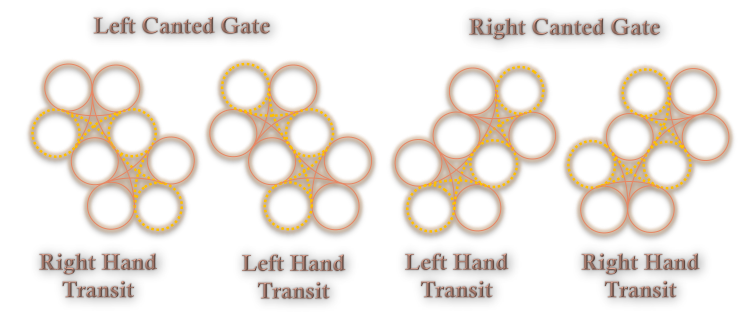
These Transit Trikirkoi are the junctions that allow for the Dragon Flies Eastward to reverse direction and so become the Dragon Flies Westward in an Orb reversal. They are pivotal to the performance of the Tortoiseshell Dragon with 2 hands.
•••
The Dragon's Gateway
The transitioning between Penters in the Dragon Flies Eastward occurs at specific Wickets according to which hand is transiting, and which axial band is the destination. The specific Wicket is shown as a small yellow ball in the images below.
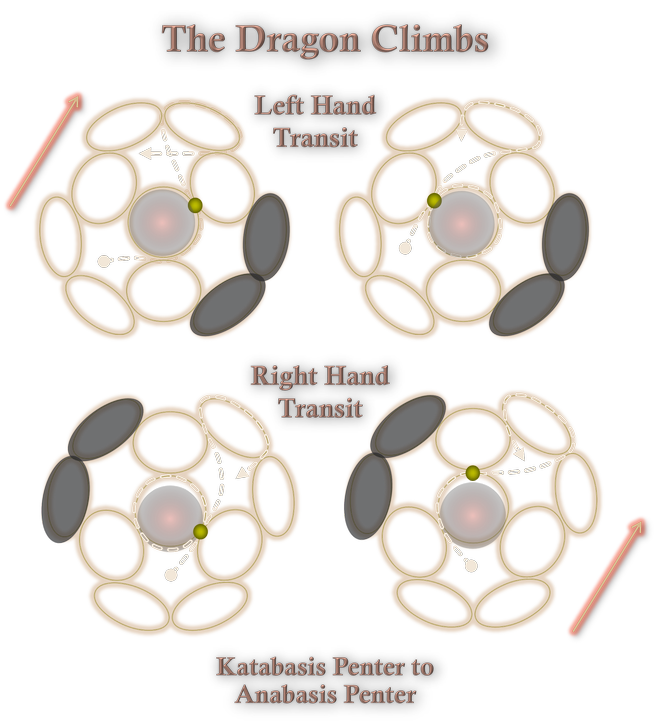
It is always the left hand that transitions to forming a Canted Gate — in an Eastward progression — while it is always the right hand that transitions to forming the upper Gates (above) and lower Gates (below). Bear in mind that the other hand will be continuing its Penter performance without moving during the transit.
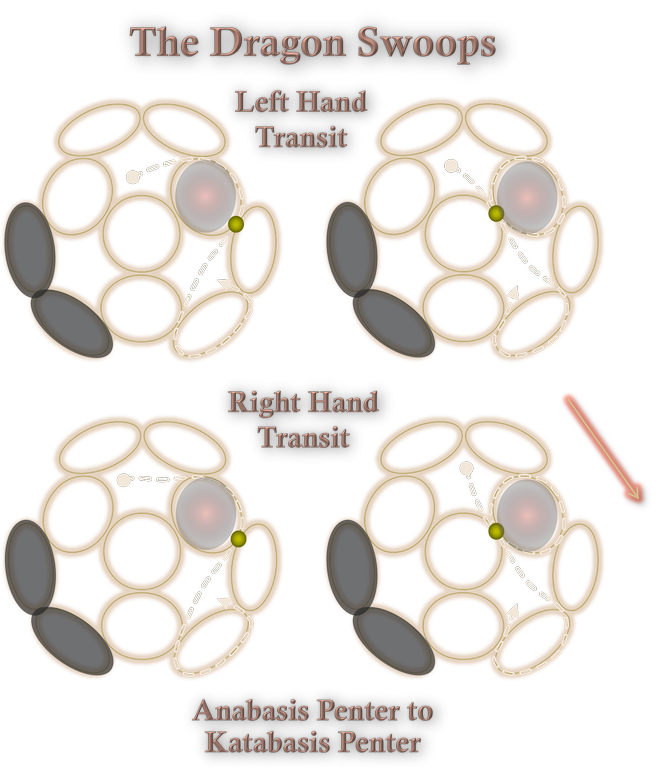
Note that on the 2 right images above, the connecting circle is completely circumnavigated before it transits to the Lower Penter.
~
The Whyzed Gate
All the examples so far have been Exwhy Gates: the Penters face flat in front of you. The Whyzed Gates fold the Penters towards each other so that they are parallel and face edge on to you.
In the Pentegraph Orb the Whyzed Gates occur where the Penters are opposite one another and are therefore Open Gates. There is a top Open Gate and a bottom Open Gate in the Pentegraph Orb. Below shows it half way between the two, but illustrates the relationship of the two Penters. This is actually the Open Mirror.
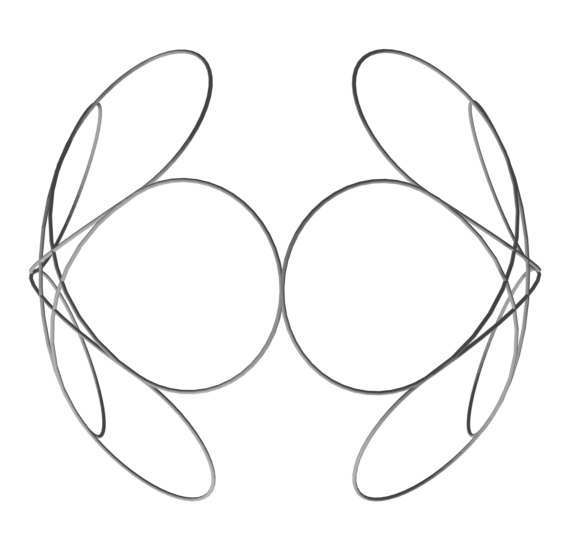
All the Whyzed gates are open gates by their very nature of the Penters being parallel to each other. Below shows another way of opening the Gate.
The Hawk on the Whyzed Gate is also known as The Gunslinger
, and you'll know why when you perform it quickly.
~
The Zedex Gate
The Zedex Gates are parallel to the floor.
This one can be called Dragonflies over the pond
, or Fancy a quick game of chess...?
~
The Doublegate Tortoiseshell
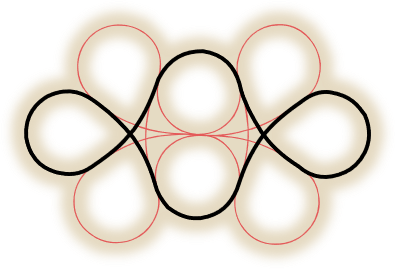
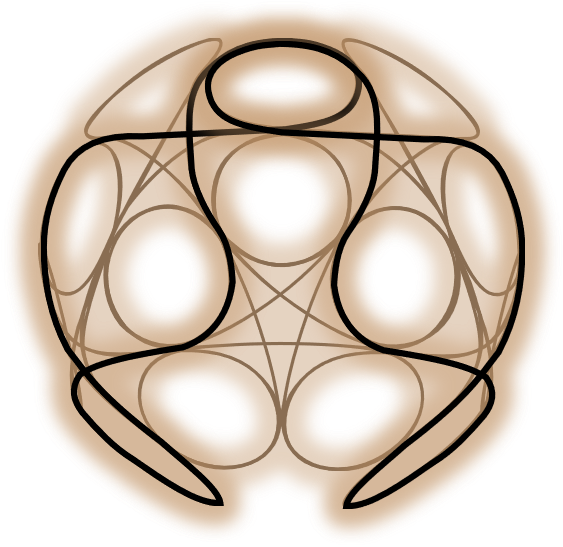
The double Gate within the Orb (also known as the Big Thumb
), and it unfolded below. This is the Open Bottom Doublegate Tortoiseshell. These are the larger scale performances within the Orb.
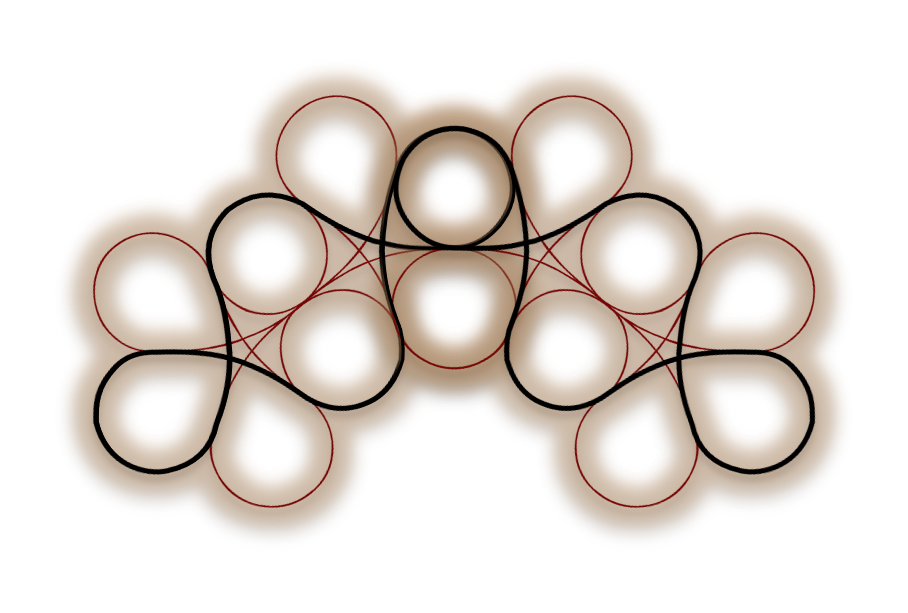
Alternatively performed with an Upper Gate over an Open Gate with an interplay between them.
•••
The Open Top Doublegate Tortoiseshell
With the conjoining of an Upper Open Gate above, and a Lower Gate below, the Pentenexus of each Penter (not shown) provides Astergate templates for the Hawkaster technique. The ensemble of migrating Hawkasters from the demons on the bottom to the angels high on either side culminating in the Archangel Aster central and to the front.
~
The Unhinged Gates
~
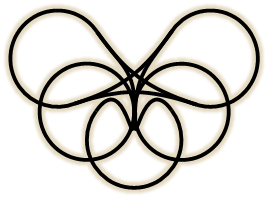
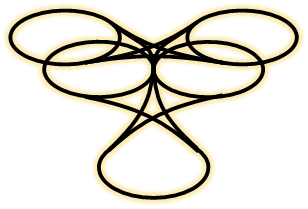
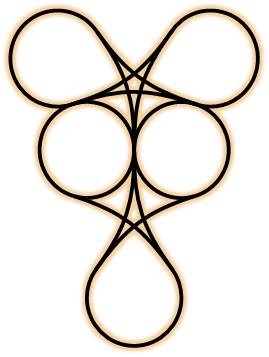
There are three types of Gate which are defined by having two Kirkoi overlap, these are called the Epikirkoi Gates and known individually as the Gate, Mirror, Loom and Seal.
All Gates consist of two Penters performed simultaneously. Three Penters joined together form the Tortoiseshell.
The Gates of Pentegraph open to the Mirrorway, and the Gateway to Megâk.