The Dykirkos
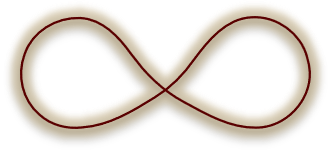
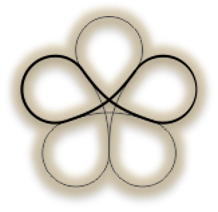
The Dykirkos is two circles in a figure of eight, joined by the path dictated by the central Pentenexus (pentagram) within a Penter.
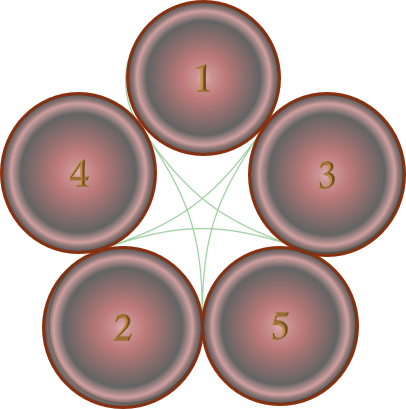
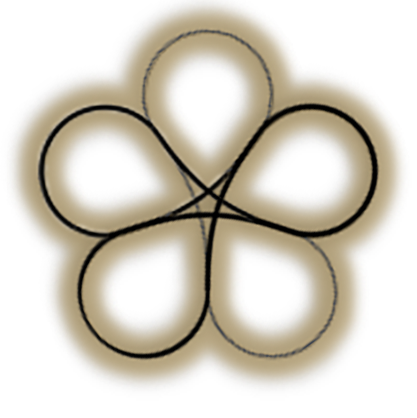
To reverse the direction of the paths motion entails a rotation around the Penter, travelling from one circle to the next and is called the Penter traversal (above), which is effectively a sequence of Dykirkoi. After 5 circles the path has reversed, after 10 it has returned to the original direction. This is the method at the heart of the Eikosakirkos Orb, and the basic method for performing Orb traversal by travelling from one circle to the other via the paths which are created by the Pentegraph Orb.

The Dykirkos which is extracted from the Penter, is not a perfect "eight", but is slightly skewed. When the Gate is collapsed into a Loom (above), and the two Dykirkoi overlap, it can be seen that the hands performing these eight's will not collide, which is not the case if a normal figure of eight was drawn. This distortion is justified from the construction of the Pentegraph Orb which produces the central Aster as shown below.
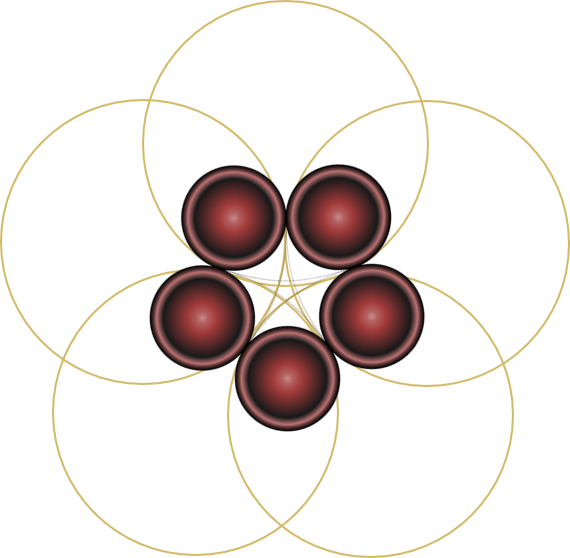
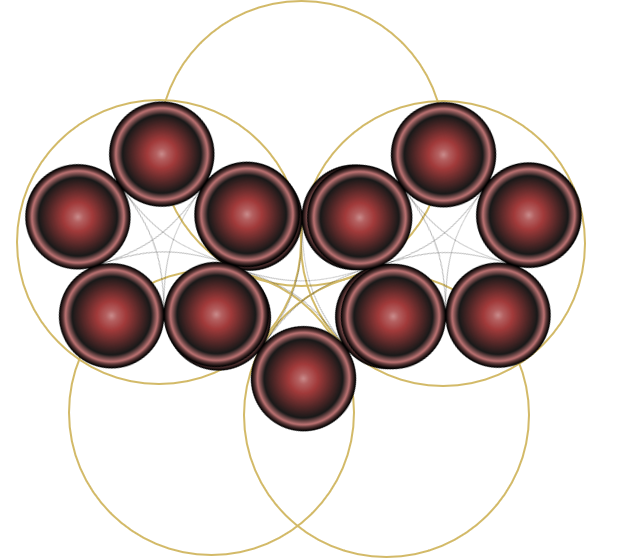
The above flattened picture shows how the Dodekakirkos Penter (5 big circles), interact with the Ikosakirkos Penter in the middle, and how it is the conjoining circles of the Dodekakirkos Penter which form the Aster in the centre and simultaneously the paths for traversing the Penter and forming the Dykirkos.
~
Below shows the upright Dykirkos within the Pentegraph Artefacts
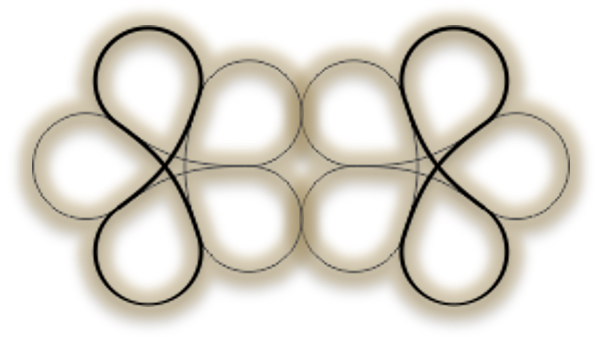
The Open Gate
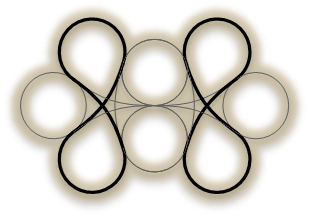
The Gate
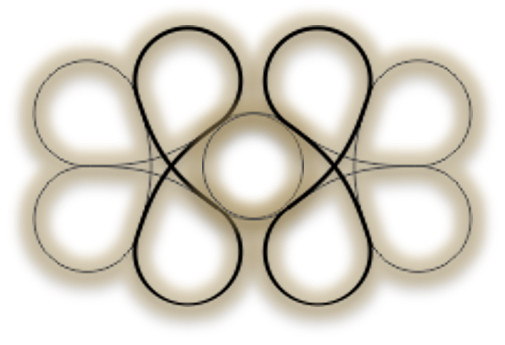
The Mirror
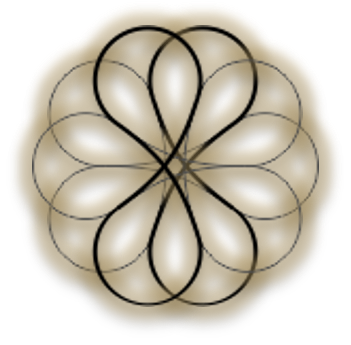
The Closed Gate
The Loom
When the Loom is performed martial style, with the Dykirkoi practiced in all the positions within the Loom, the Kirkoi within each Dykirkos are either both dextral or both sinistral with the hands being 180º apart. Using the synchronicity of hikite in each of the positions, it produces a very powerful practice. This is known as the Pentegraph Crossgate.
~
The Pentegraph Cross

The Cross of Pentegraph (above), is the junction between the Gateway and the Mirrorway, as can be evidenced below if interacted with.
~
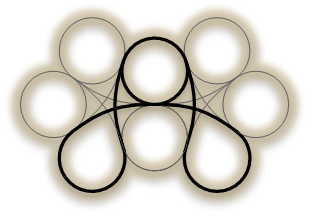
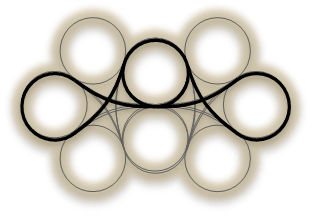
Other possible configurations of the Dykirkos within the Penters and Gates: