Toning
Toning is an effective method of stopping any mental chat by drowning it out. If you are like me and songs can get stuck on an endless loop within the mind, then making a continuous and monotonous hum can force it to stop.
My toning sound is like an "Om" but when the mouth closes so too does the breath. This is similar to making a "b" but the mouth remains shut and the breath stops. Consequently it is an "Orb" rather than an "Om", but the 'b' is not pronounced, it is just the closing of the mouth and the ceasing of the sound. The sudden cessation of sound plunges one into an abyss of silence, making it more obvious to notice and curtail any mental noise continuing underneath, or the bliss of emptiness if none. Stay in this state whilst silently breathing in for the next one, or if it isn't absolute bedrock silence, breathe in through the nose while continuing the toning with a closed mouth.
'O' is the start of the hum (and vowel change and whistle if done).
'R' is the rolling trill an octave lower (if it happens).
'B' is the abrupt ending of it.
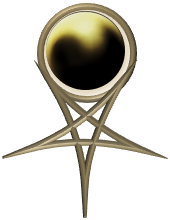
The whole thing spells ORB, which is also the acronym for Observe, Release, Believe.
The 'O' can use the Glossaster to produce a song. This is like a mantra.
The 'B' can also be pronounced by a short, sharp explosive shout: "Bah", a pop. This is very affirming. It should shake the world!
~
Glossaster

Glossaster—the word coming from the Greek for tongue and star—refers to the tracing of the path around a sphere (Aster), by the tongue within the cavity of the mouth, while toning. This produces a peculiar melody which is unique to this method. The closest thing to it would probably be the Tibetan throat singing, but I don't think they use the tongue in this geometric way.


The tongue performs the Aster inside the mouth while a tone is produced. Whatever the sound is that is produced, this is the song. Because the tongue is following a specific path, it constitutes as a word—albeit a very long one. It is in this context that the activity could be considered a mantra. The orientation of the Aster will change the song and therefore there can be a number of different songs that can be performed. The size and speed of the Aster will also vary the song.
The animation on the right uses a ball to illustrate the movement that the tip of the tongue makes.
The cavity of the mouth produces an orb of resonating space which is carved and dissected by the tongue as it describes the path of the Esokirkos or Aster. Because the path of the tongue follows a precise route, it will produce a specific melody which repeats. The repeating will produce a rhythm and create a song from the aspects of the melody (in 5/4).
The Glossaster's similarity with a mantra is from the perspective that the change of note produced in a set rhythm is equivalent to the words chanted in a mantra. The actual words are irrelevant in a mantra, as the language areas of the brain are not involved, but can help the effect if the brain is conditioned into thinking that it does or associates a mental concept with the performance. As the Aster is a path of sacred geometry, then I believe it could qualify as a mantra, or be called something else which has a similar realm of intent.
With the eyes closed and linking the eidetic image of the pentagram with the motion of the tongue and the feeling that derives from it, along with the sound that it produces, and the sustained slow breathing necessitated from the in and out toning, a meditation is achieved. The absorption level due to the complexity and concentration needed, is the amount of involvement that is necessary in Megâk. The commitment reinforces the gravity and seriousness of the desire that can accompany it, further enhancing the neurological effect.
The Aster path can be duplicated in imagination in a different part of the body to produce spells. The Glossaster can also be used in conjunction with ORB.
Although shown here in its upward position, it is the downward Aster that is the one that I think makes the best sound and is most useful in being a helper in augmenting certain Somatic Asters, especially the Cervical Aster and the Sacral Aster.