The Tortoiseshell
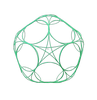
The Tortoiseshell is an extraction from the Pentegraph Orb, of which it is effectively one half of the Orb. There are two types: the Anabasis Tortoiseshell and the Katabasis Tortoiseshell. Both consist of 3 Penters. The Anabasis Tortoiseshell has a lower Gate at the bottom and a Penter above, while the Katabasis Tortoiseshell has an upper Gate at the top and a Penter beneath.
For the Anabasis Tortoiseshell (below) it is the Anabasis Penter above the lower Gate that is the gravitational aspect of the performance, and to which the body should be oriented to. As the Pentegraph Orb is traversed, the body always faces towards the defining Penter of the Tortoiseshell.
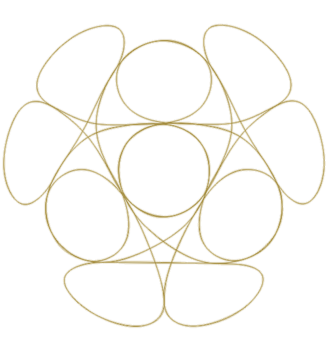
Regardless of whether it is a top Gate or bottom Gate Tortoiseshell (Katabasis and Anabasis respectively), it is the central circle — Mesokirkos — which is focussed upon and which acts as the pivot to the Canted Gates, with the movement of the arms around the other Kirkoi being observed with the peripheral vision. By staring straight ahead at the Mesokirkos while performing the Tortoiseshell, 180º eyesight can develop due to the curvature of the Orb.
~
The Three Gates of the Tortoiseshell
The Three Gates of the Tortoiseshell are the keys to learning the Pentegraph Orb. It is through these that Kirkosial spatial understanding of the Pentegraph Orb is achieved. They are the Upper or Lower Gate together with the Left (Ascending) and Right (Descending) Canted Gates
The Ascending Canted Gate
This performance is called The Dragon Climbs.
The Descending Canted Gate
This performance is called The Dragon Swoops.
The Gate
This is the basic Dragonfly on the Gate. In this visual presentation, the flattened form of the Upper Gate and Lower Gate look the same, but when performed within the Orb they are quite different in performance.
•••
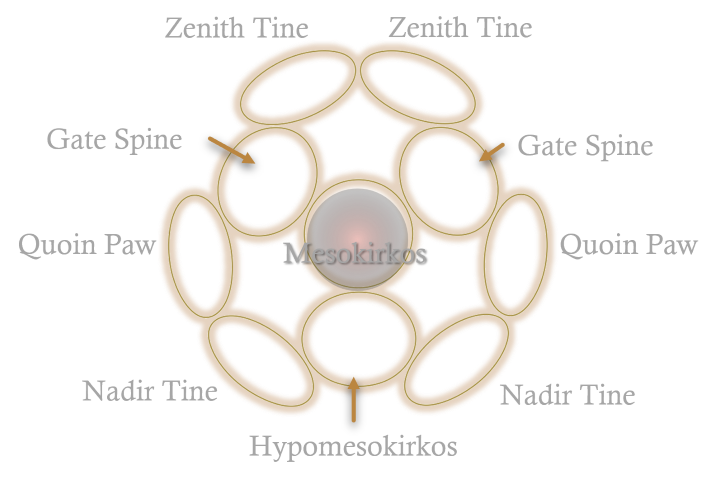
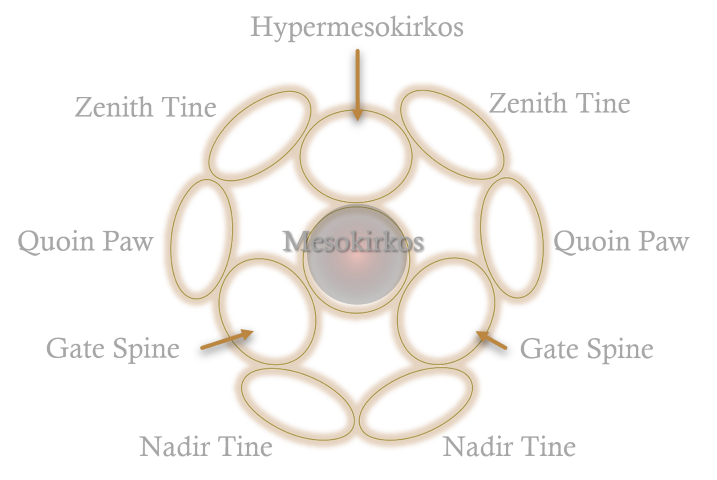
Tortoiseshell Nomenclature
Anabasis Tortoiseshell
Katabasis Tortoiseshell
•••
The Tortoiseshell Dragon
The two Tortoiseshell Dragons (the Anabasis and Katabasis) utilise the Dragonfly technique while transitioning between the two Canted Gates and either an upper Gate or a lower Gate.
The praxis consists of performing the Dragonfly on the Gate, and then using the Mesokirkos for the left hand to transition to the upper Penter and the Dragon Climbs, and then back down again to the Dragonfly on the Gate. The right hand will then use the Mesokirkos to move up to the upper Penter and the Dragon Swoops and then returns via the Mesokirkos to the Gate below — this is for the Anabasis Tortoiseshell Dragon. The Katabasis Tortoiseshell Dragon does effectively the same thing but the left hand moves from the upper Gate to a lower Penter via the Mesokirkos to the Dragon Swoops, and the right hand to the Dragon Climbs.
It is a means to practice The Dragon's Gateway and the 4 Gates that occur within the Pentegraph Orb.
It is allowable during the performance to pause the progression by using the Tortoise's Paws (described below).
~
The Tortoise's Paws
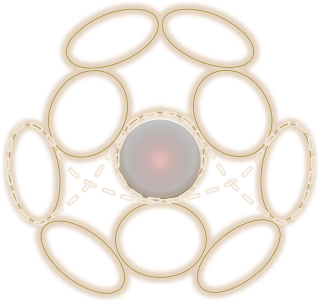
The Gate's Hinges within the Tortoiseshell pivot upon the Mesokirkos in the centre of the Tortoiseshell, and are the pauses between transitioning to a different Penter. In the case of the Anabasis Tortoiseshell illustrated here, the transition creates either a left or right Canted Gate, or a Lower Gate.
The pause is not a stationary arresting of the performance but an indecisive back and forth before the new direction is put into action.
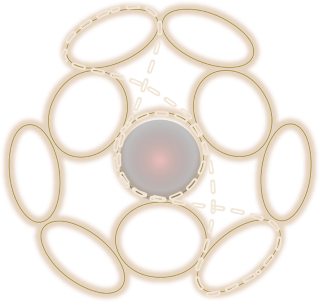 In this one on the left, the pause is for the left hand only with its choice of either remaining in the upper Penter or transitioning to the lower Gate.
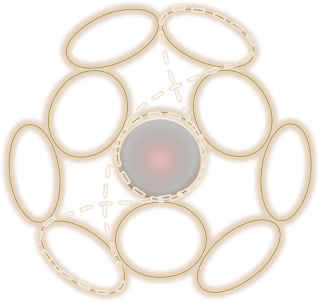
In the one on the right, the pause is for the right hand only with its choice of either remaining in the upper Penter or transitioning to the lower Gate.
~
The Tortoiseshell Dance

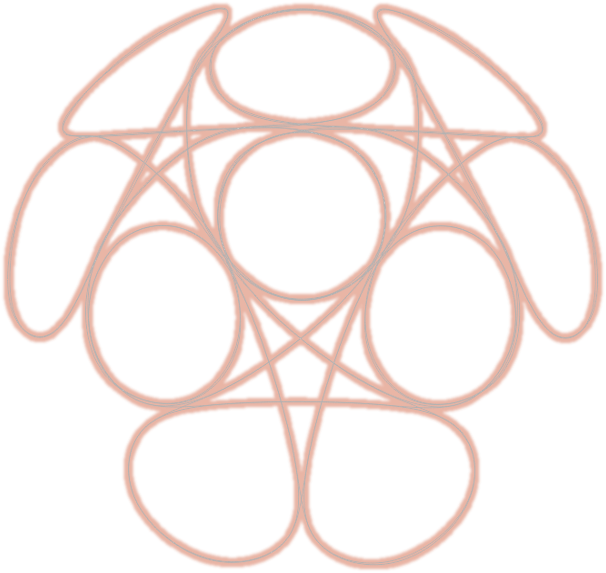

The Tortoiseshell Dance is performed with the 2 arms doing Dragonfly on the Gate while a Penter beneath is performed with the foot, knee or pelvis (shown by the blue ball in the animation above). It is extremely difficult !
The Split Tortoiseshell (below), is the template to use for practice. The knee is used for the tracing of the bottom Penter, while the hands do the Gate above it.

The sequence of circles and their rotations in the split Tortoiseshell.

The bottom Penter can also be used by the pelvis while the arms are performing the Gate. For this, the split makes the bottom Penter be performed in the Zedex to the Gate's Exwhy.
This Tortoiseshell uses the pelvis for the bottom Penter instead of the knee or foot, allowing a movement along the ground which is synchronous to the arm movement. The pelvis draws the path of the dance, the feet falling where they may, so to be optimum for supporting the body, while its arms perform the Gate.
We are so used to leading our movement with our feet, it is only when the pelvis movement is tethered to the Penter do the feet have to follow instead of lead, and get out of the way of the path which is being laid out. There should be an optimum positioning of the feet around the pelvic Penter which could be drawn to help the development of this. Acute sensitisation of the pattern and the body position relative to the feet from the pelvis. Body can be perpendicular to the pelvis and move about fixed to the pelvic movement or the body can be stationary while the pelvis follows the Penter. The two can be combined to accommodate awkward positions (e.g. prevent a double foot movement occurring to keep the centre of gravity above the feet).
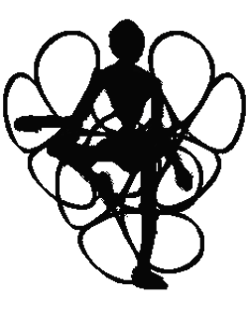
The Tortoiseshell Dance is I believe a very ancient sacred dance and indeed could possibly be the dance that Shiva is depicted of performing in statuettes and paintings. The traditional four arms are for conveying the movement of the dance, as it is utterly anatomically impossible for more than one arm to work within the shoulder joint.
It is a performance that if not done very well, will just make you look ridiculous, and therefore it is something to practice privately and in secret. But when able to be performed very well, you will be the manifestation of Shiva.
•••
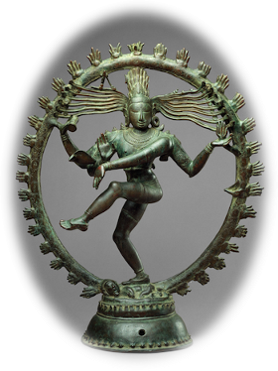
Is this depiction of Shiva Nataraja representing some random movements, or is there a specific pattern of natural geometry that is being performed? Do the paths of the arms and legs follow some arbitrary or contrived and meaningless route, or is this the pinnacle of demonstrating advanced movement capability using sacred geometry?
I believe it is a form similar to the Pentegraph artefacts of the Tortoiseshell or Dragon Flies Eastward, and if not from this pattern, then which, and why.
Did the person who created this sculpture actually know the dance and the exact positions of the limbs? Probably not as he is using an extra set of arms to represent the movement, though the 32 flame nodules around the outside is interestingly the same number of circles that there are in the Pentegraph Orb.
~
The Doublegate Tortoiseshell
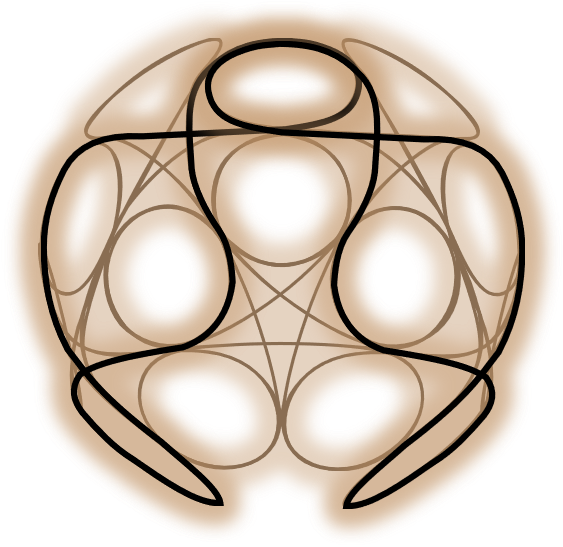
The double Gate within the Orb (also known as the "Big Thumb"), and it unfolded below. This is the Open Bottom Doublegate Tortoiseshell.
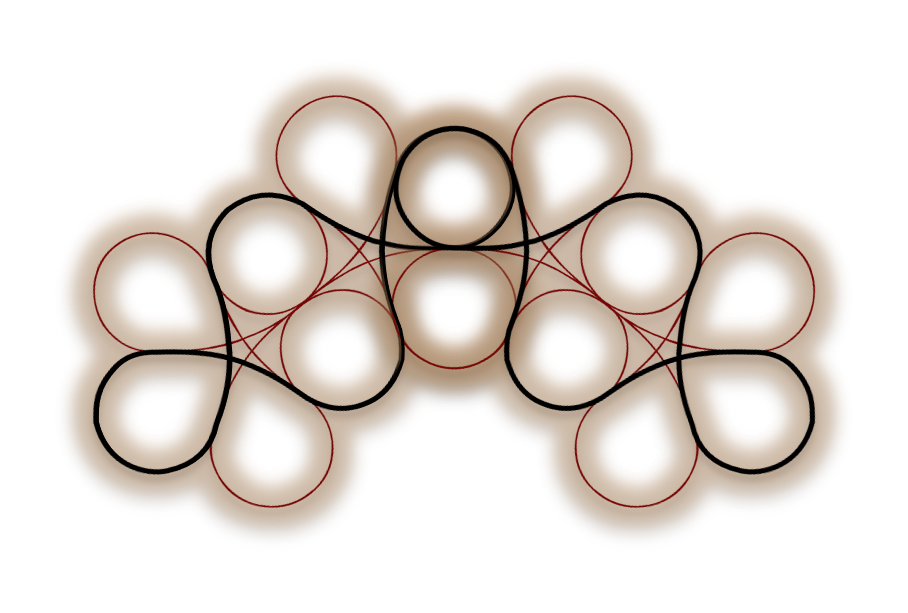
When performed with only the two arms, the performance is of two Canted Gates transitioning to the top Gate between them. Three Gates are therefore performed.
The Open Bottom Doublegate below in 3D perspective.
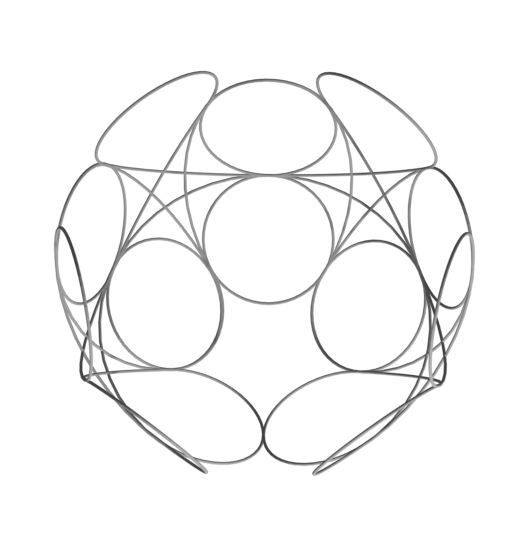
The Open Top Doublegate below in 3D perspective.