The Dragon's Cage
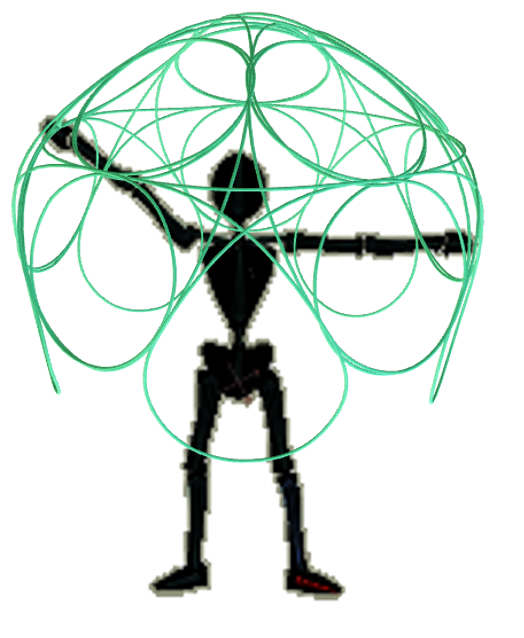
The Dragon's Cage is an Orb traversal method, and is the quickest way of circumnavigating the Pentegraph Orb. It can be performed slowly or swiftly with a rhythm and foot movement determined by distinctive arm positions. There can be many styles of performance with the peculiarities determined by the swift and slow aspects.
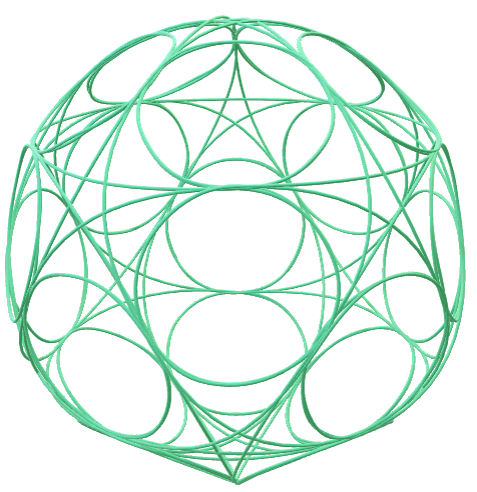
Each hand uses all 20 circles of the Orb only once during the traversal, both hands performing simultaneously and using different paths. The two resulting paths are the only way that this can be accomplished, with a further two paths created by mirroring the direction. This means that there are two clockwise Dragon's Cages and two anti-clockwise Dragon's Cages. The clockwise Dragon's Cage, also known as “Dragon Flies Eastward” is dissected below.
~
Dragon Flies Eastward

This is the path that circumnavigates the Pentegraph Orb, utilizing each of the 20 circles only once and returning to its start point. It is the ultimate kata, and because it transcribes a sphere, it doesn't take that much space to perform it in. In the above video, the left hand is represented by the grey ball.
It is both an extension and diminution of the Gate, where both hands use the Dragonfly technique, with the left hand one circle behind the right in their respective Penters. The Dragonflying truncates the Gates, leaving out parts of each Penter as each Penter Gyre is interrupted to allow progress through the orb.
Performing the orb traversal in a clockwise direction (dextral), with the left hand is shown below. There are 5 segments (self repeating parts) in a traversal of the orb, it taking 2 traversals to complete it fully. Each segment uses 4 Penters (2 lower equatorial and 2 higher equatorial), to progress around the orb — lower to upper, upper to lower, lower to upper.
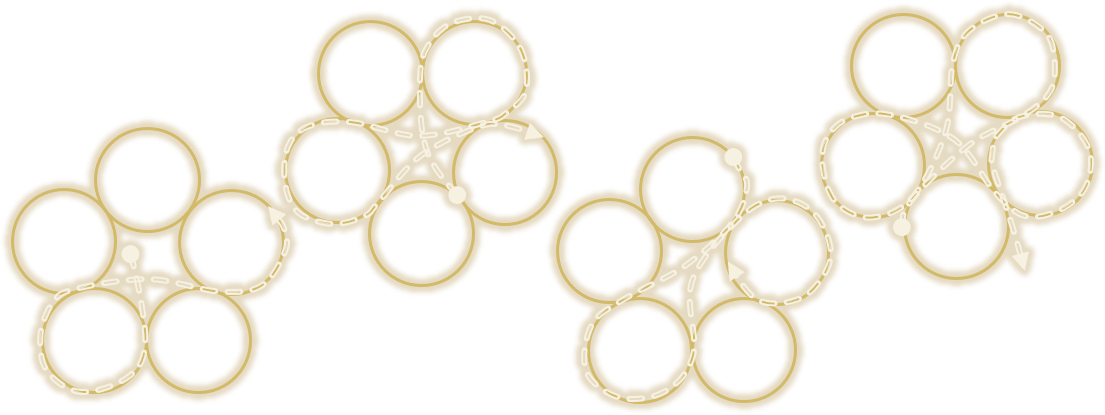
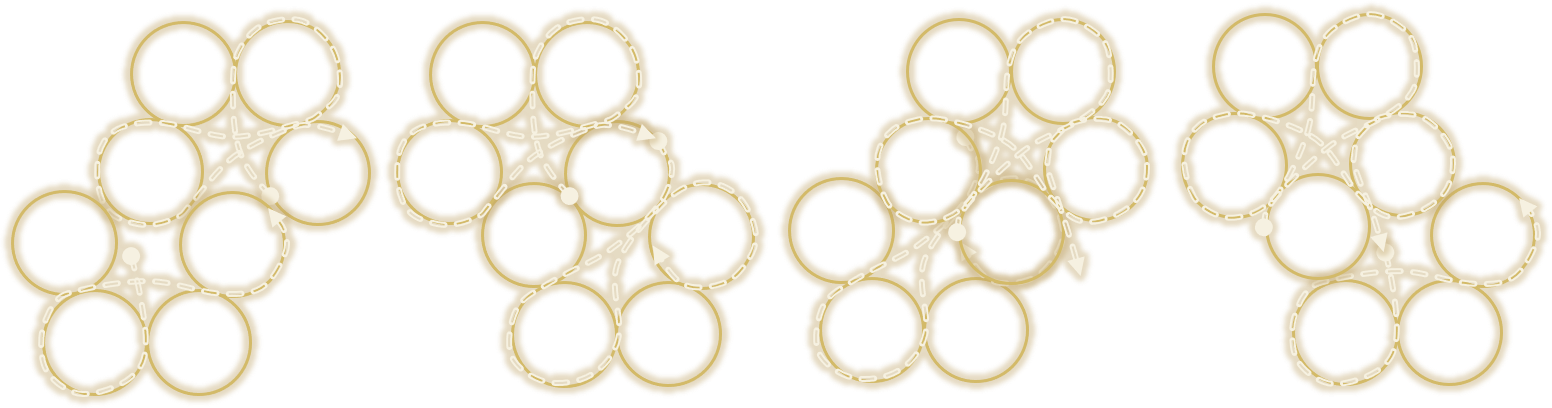
The Dragon's Cage left hand dextral segment Penters
The spot is the start for each Penter, the arrows ending position is at the same point as the spot in the next Penter. Because of the 3D nature of the movement it is not possible to show the whole thing as it wraps around behind you. So I show the movement broken down into Penters, Gates and Tortoiseshells, in an attempt to clarify the path.
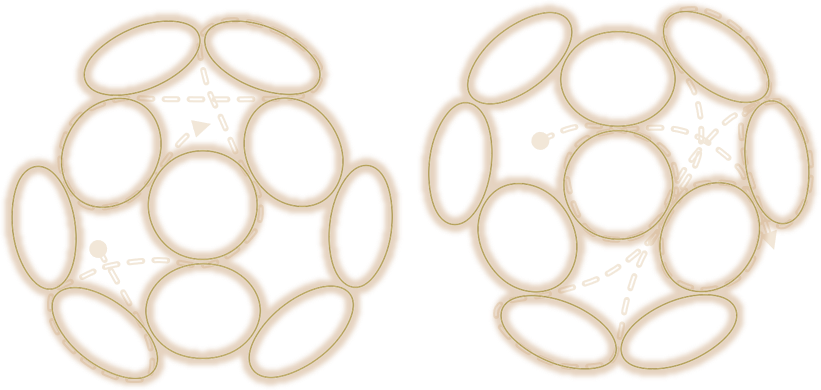
The Gates below duplicate the path of each Penter to show the continuity occurring in each Gate.
The Dragon's Cage left hand dextral segment Gates
The Tortoiseshells shown below gives a better demonstration of the path.
The Dragon's Cage left hand dextral segment
The 3D interactive view of the left dextral segment is shown below, there being 5 of these in an Orb traversal.
Dragon's Cage left dextral segment
~
The right hand simultaneous path is different to the left's, and has the same difficulty in representation.
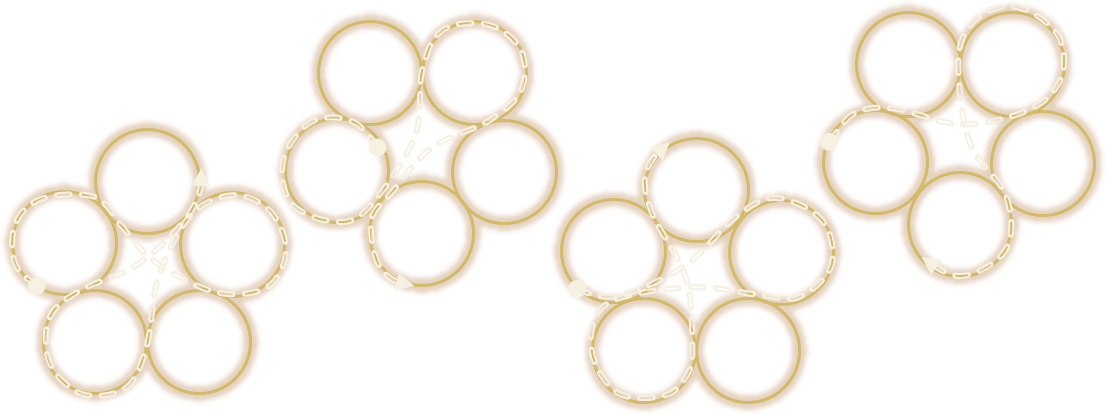
The Dragon's Cage right hand dextral segment Penters
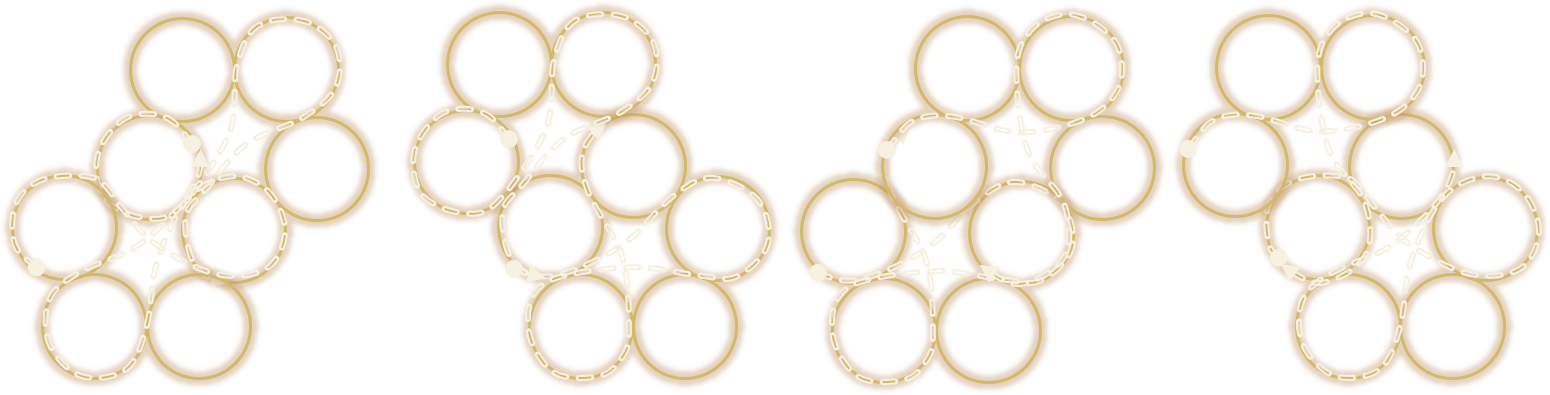
The Dragon's Cage right hand dextral segment Gates
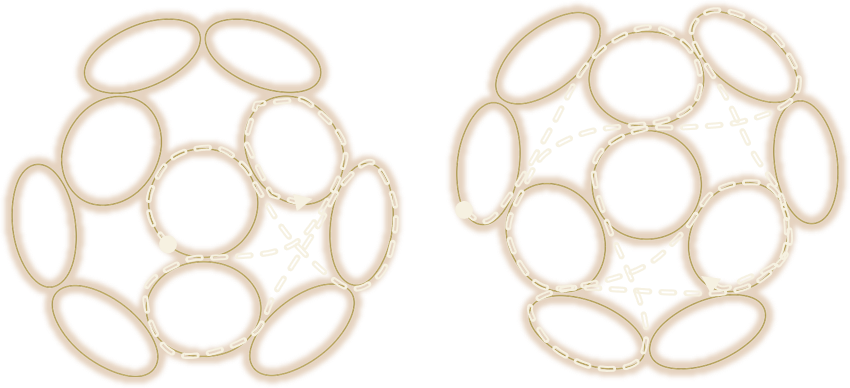
The Dragon's Cage right hand dextral segment
Dragon's Cage right dextral segment
This path can also be used with a performance of both hands joined together, meaning that the left hand is also travelling this path. The same also applies to the first path which can also be used with a performance with both hands joined together.
~
Putting the left and right sides together is unfortunately a display of spaghetti! It is actually easier to perform it than it is to show it — and that's saying something! But effectively, the result is the Pentegraph Orb below (without its Zenith and Nadir Penters), which you can drag to investigate how the two Dragon's Cages join together!